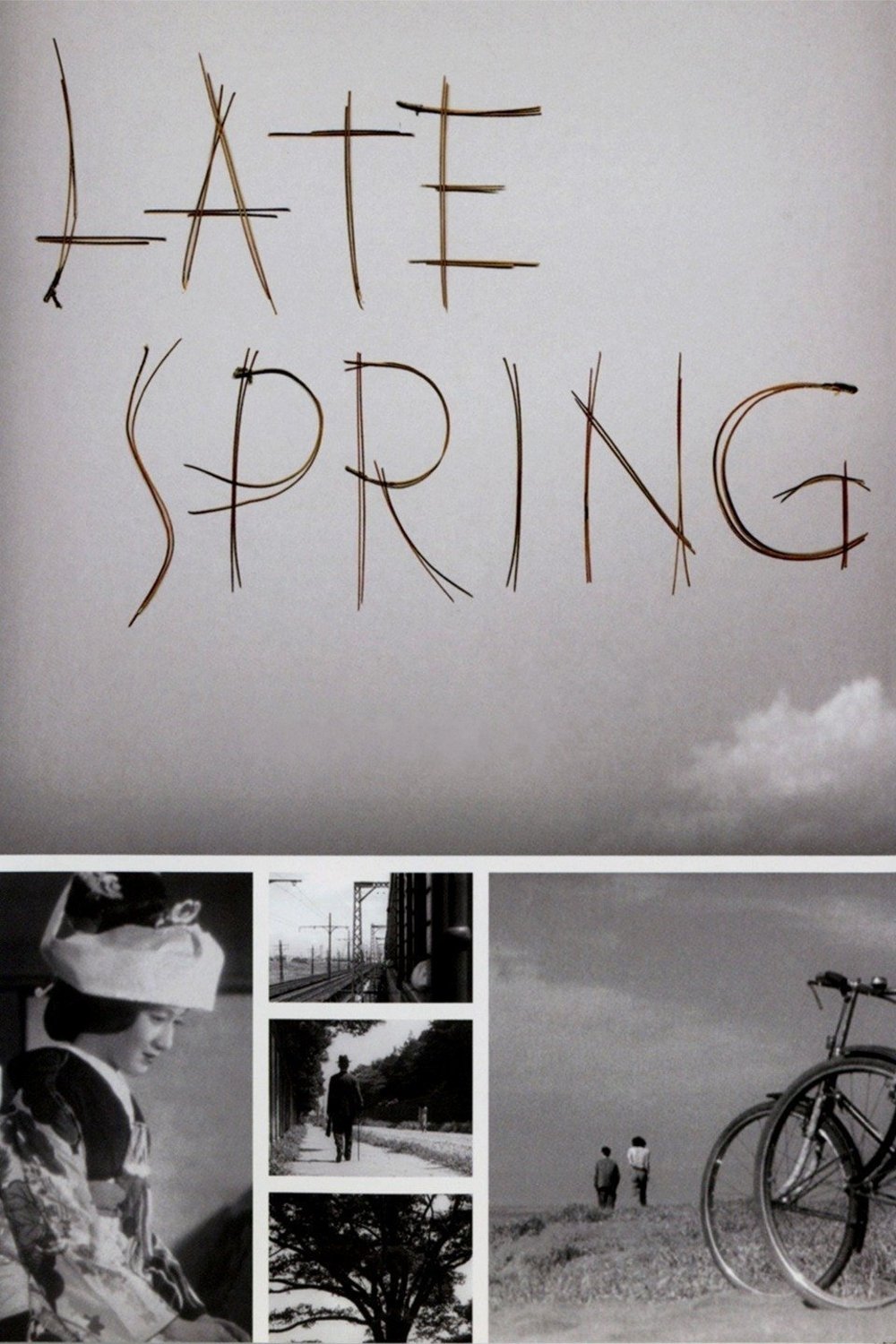
Late Spring
1949 · Directed by Yasujirō Ozu
Original language: Japanese
- drama
The story
Noriko is perfectly happy living at home with her widowed father, Shukichi, and has no plans to marry -- that is, until her aunt Masa convinces Shukichi that unless he marries off his 27-year-old daughter soon, she will likely remain alone for the rest of her life. When Noriko resists Masa's matchmaking, Shukichi is forced to deceive his daughter and sacrifice his own happiness to do what he believes is right.
What it’s like
Static, low-angle shots hold ordinary rooms in soft black-and-white daylight, with the camera set at tatami height as if seated among the characters. Scenes open and close on pillow shots of teapots, kettles, and the sea at Kamakura, and the frames are balanced and still. The sound is mostly voices, clinking cups, footsteps on wood, and the occasional train, with little or no music to push feeling. The pace is unhurried and deliberate, scenes lingering a beat past their conversations so the quiet between lines does the emotional work. Its tone is serene and bittersweet, a gentle melancholy about change and the small ceremonies of family life, after the war has altered the ordinary world. A widowed father and his grown daughter share a warm, teasing closeness, and the story follows the slow, tender weight of their goodbyes. Intensity is very low: no violence, no gore, no sexual content, and no fear beyond mild social pressure. It suits a rainy Sunday, a quiet evening, or a patient rewatch, and it is for viewers who want stillness, careful composition, and emotional restraint.
More films like Late Spring
Closest in mood, pacing and theme. Tell us why you loved Late Springand we’ll explain which ones fit you.