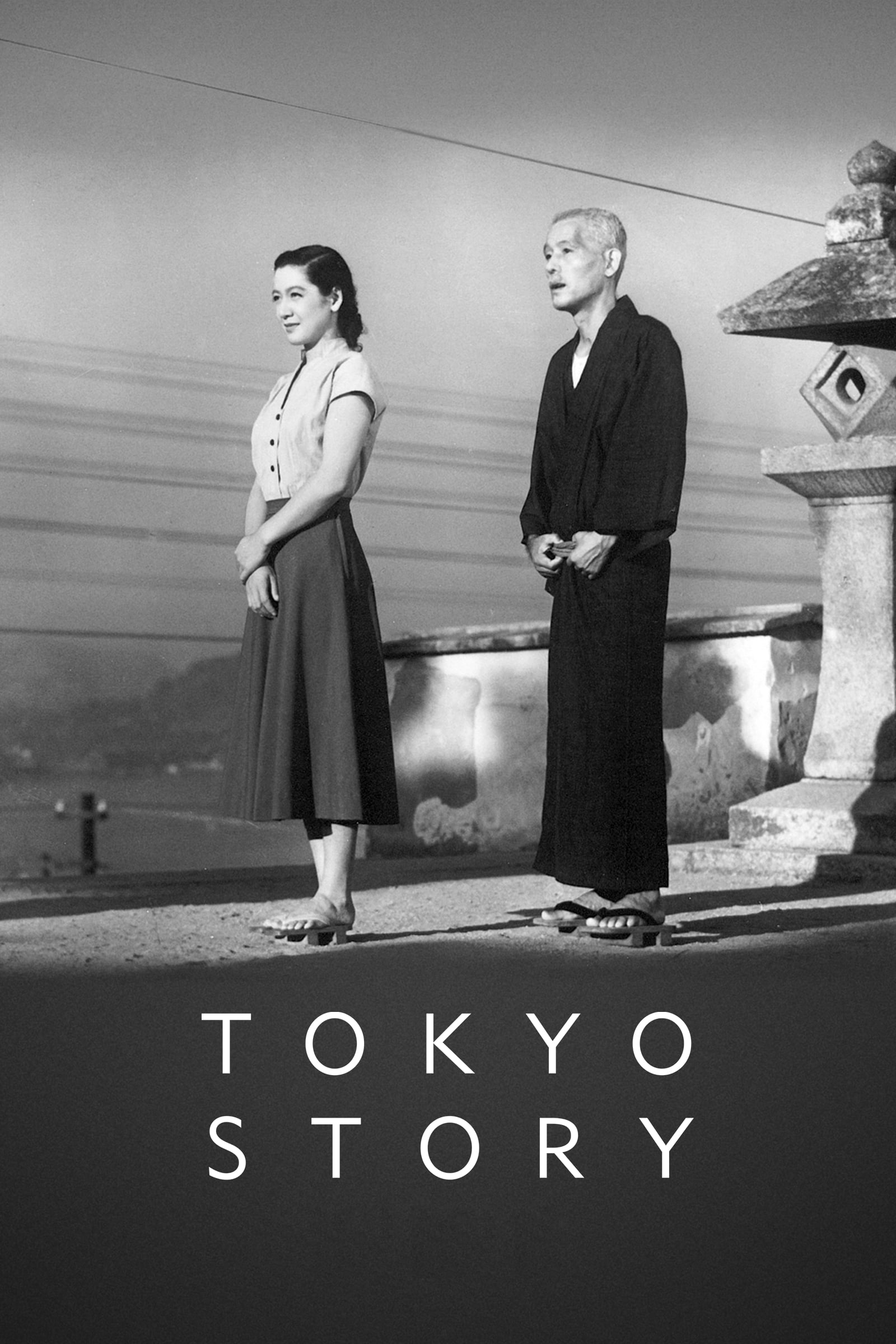
Tokyo Story
1953 · Directed by Yasujirō Ozu
Original language: Japanese
- drama
The story
The elderly Shukishi and his wife, Tomi, take the long journey from their small seaside village to visit their adult children in Tokyo. Their elder son, Koichi, a doctor, and their daughter, Shige, a hairdresser, don't have much time to spend with their aged parents, and so it falls to Noriko, the widow of their younger son who was killed in the war, to keep her in-laws company.
What it’s like
Static, unhurried camera set low at tatami height, with long held shots of ordinary rooms, laundry lines, and Tokyo rooftops in flat, soft daylight that never tips into drama. Ozu's compositions are symmetrical and carefully still, the frame often empty for a few seconds after people leave it, and the sound is mostly domestic: a train passing, a fan turning, a clock, a distant boat horn, with a sparse, gentle score that rarely intrudes. The vibe is quiet, wistful and warm, a slow ache under a calm surface, the kind of film that suits a rainy Sunday, a late evening alone, or a patient rewatch. It moves at the pace of an ordinary day, with gentle comedy and small kindnesses, and its people's arcs turn on a family slowly noticing its own drift: parents who feel like a burden, grown children who are busy, and a widowed daughter-in-law who becomes the most attentive presence in the house. Emotionally it is restrained and tender, with grief handled through silence and sidelong glances rather than outbursts. There is no violence on screen and nothing frightening; the sadness is gentle and the darkest moments are quiet. It is made for viewers who want to sit with stillness, who like films that trust small gestures, and who are drawn to family drama about time, age and what gets left unsaid.
More films like Tokyo Story
Closest in mood, pacing and theme. Tell us why you loved Tokyo Storyand we’ll explain which ones fit you.