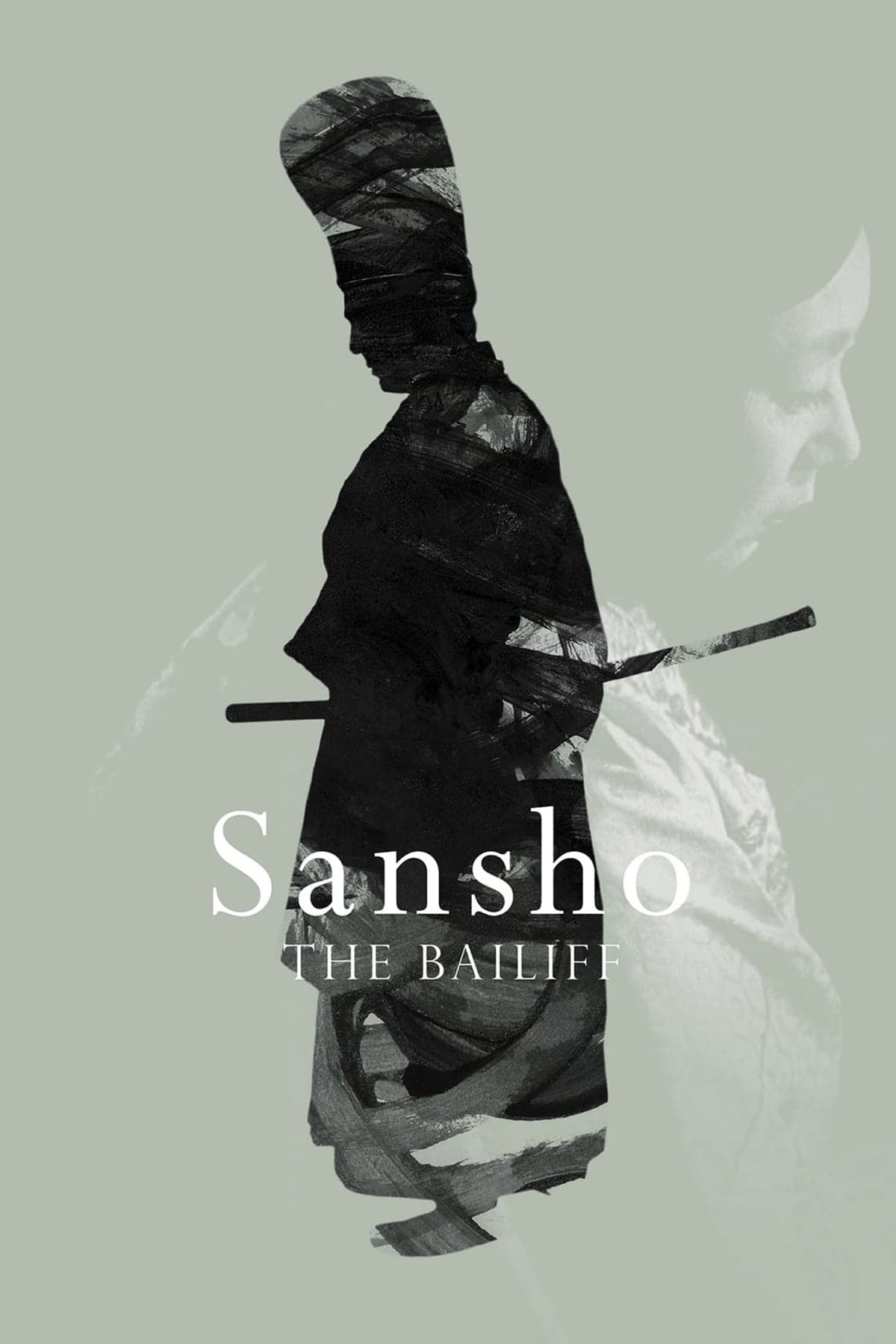
Sansho the Bailiff
1954 · Directed by Kenji Mizoguchi
Original language: Japanese
- drama
The story
In 11th-century feudal Japan, following the exile of an idealistic governor, his wife and children are separated by slave traders; the children, Zushio and Anju, are sold into brutal servitude under the cruel bailiff Sansho.
What it’s like
Long, unhurried tracking shots and carefully composed frames in black and white, with deep blacks and soft grey gradations that make wind-blown reeds, snowy shorelines and candlelit interiors feel tactile and remote. The camera glides at a patient distance, often letting a scene play out in one fluid movement, so the image itself seems to breathe. Sound is sparse: traditional Japanese instruments, wind and water, long silences that let grief settle. The mood is elegiac and austere, a slow, sorrowful ache rather than despair, with moments of tenderness and quiet dignity. Its pace is deliberate and meditative, suited to an attentive evening alone or a considered weekend viewing rather than background watching. Its people are shaped by loss and cruelty, and the arc turns on a slow, hard-won pursuit of justice and mercy. The intensity is serious but restrained: there is cruelty, enslavement, and a few brutal punishments, shown with more implication than gore, and some sexual exploitation handled discreetly. It suits viewers who want a formally rigorous, emotionally weighty classic and can sit with sorrow for two hours.
More films like Sansho the Bailiff
Closest in mood, pacing and theme. Tell us why you loved Sansho the Bailiffand we’ll explain which ones fit you.