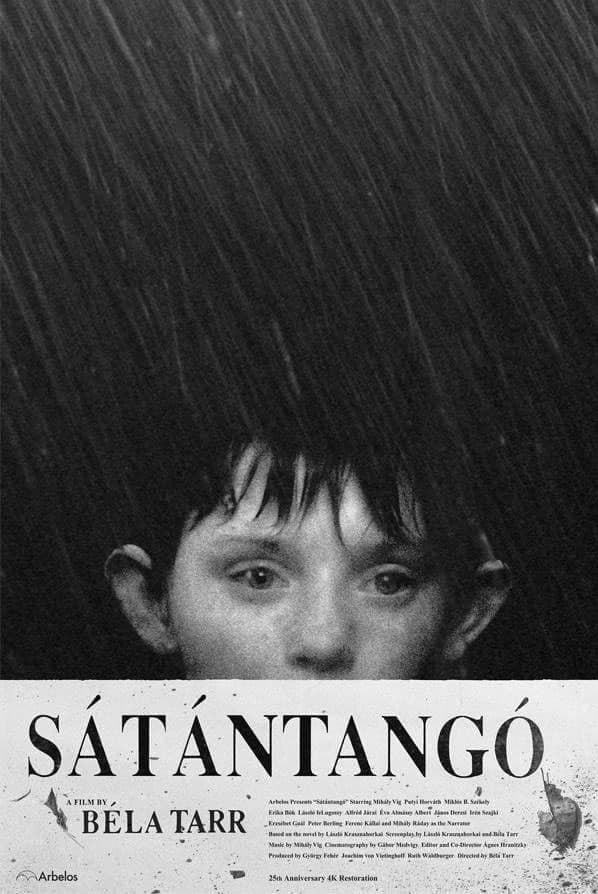
Satantango
1994 · Directed by Béla Tarr
Original language: Hungarian
- drama
The story
Inhabitants of a small village in Hungary deal with the effects of the fall of Communism. The town's source of revenue, a factory, has closed, and the locals, who include a doctor and three couples, await a cash payment offered in the wake of the shuttering. Irimias, a villager thought to be dead, returns and, unbeknownst to the locals, is a police informant. In a scheme, he persuades the villagers to form a commune with him.
What it’s like
Long, slow black-and-white takes of mud, rain-soaked yards and crumbling farmhouses, the camera drifting with a patient, almost liturgical stillness while the image is held for minutes at a time. Grey, washed-out light dominates, broken by flashes of lamp glow in dim interiors and the grain of old film stock. The soundscape is rain, wind, dogs, creaking doors, and the distant clank of machinery, with a single insistent, hypnotic musical theme that returns like a tide. The vibe is bleak, austere and strangely meditative, a slow-burning dread that hangs over damp, impoverished rural life. It suits a long, unhurried evening alone when you can give a film several hours of attention and do not need anything to happen quickly. Pacing is glacial, with scenes that stretch and repeat, and the emotional register is cold, weary and fatalistic, following a community of deceived, hopeful and desperate people whose trust keeps curdling into disillusion. Violence is rare and mostly off-screen, but there is cruelty, animal suffering, and a sustained air of moral corruption and despair. Made for viewers who love demanding art house cinema, who are comfortable with long silences, and who want a film that makes stillness itself feel heavy.
More films like Satantango
Closest in mood, pacing and theme. Tell us why you loved Satantangoand we’ll explain which ones fit you.