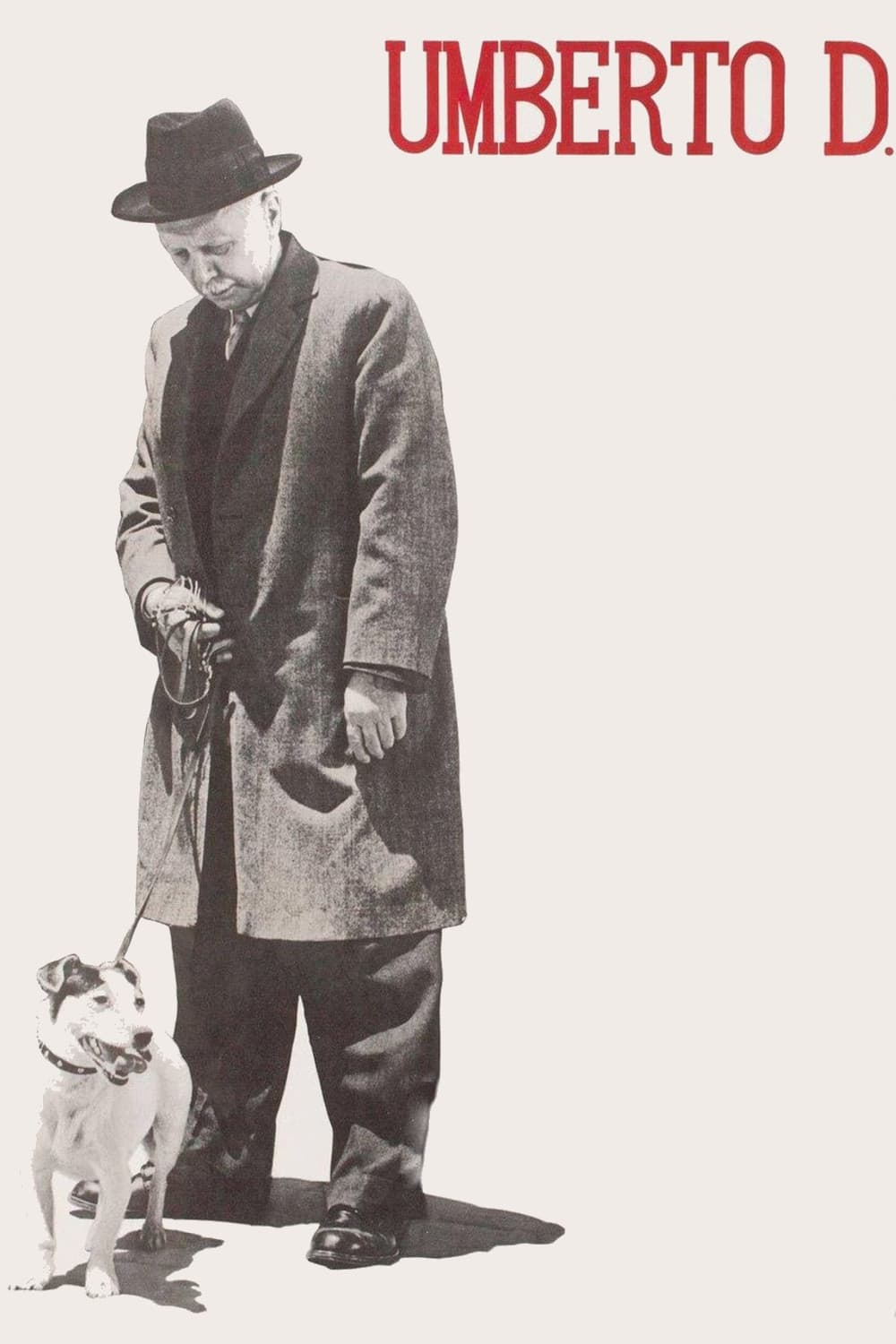
Umberto D.
1952 · Directed by Vittorio De Sica
Original language: Italian
- drama
The story
When elderly pensioner Umberto Domenico Ferrari returns to his boarding house from a protest calling for a hike in old-age pensions, his landlady demands her 15,000-lire rent by the end of the month or he and his small dog will be turned out onto the street. Unable to get the money in time, Umberto fakes illness to get sent to a hospital, giving his beloved dog to the landlady's pregnant and abandoned maid for temporary safekeeping.
What it’s like
Long, patient takes of ordinary Roman rooms in flat, grey winter daylight, the camera often holding still while people cross the frame, so the city's worn stone, cracked plaster and shuttered windows feel like the real weight of the story. Black-and-white neorealist texture with natural faces and unhurried gestures; the score is sparse and faint, with long stretches of street noise, footsteps, distant trams and a dog's nails on tile. Its vibe is quiet, tender despair, a grey rainy-afternoon sadness that slowly warms into affection. The pacing is deliberately slow and observational, circling small daily indignities rather than building toward spectacle, and its emotional arc follows an proud old man who will not beg, learning how much he depends on the few people willing to help him. Intensity is very low: no violence, no gore, and no sexual content, only sorrow, hunger and the fear of eviction, with one moment of real distress that is more heartbreaking than frightening. Made for patient viewers who want an intimate, humane portrait of poverty and dignity, and for anyone who wants something gentle but unsentimental for a reflective evening.
More films like Umberto D.
Closest in mood, pacing and theme. Tell us why you loved Umberto D.and we’ll explain which ones fit you.