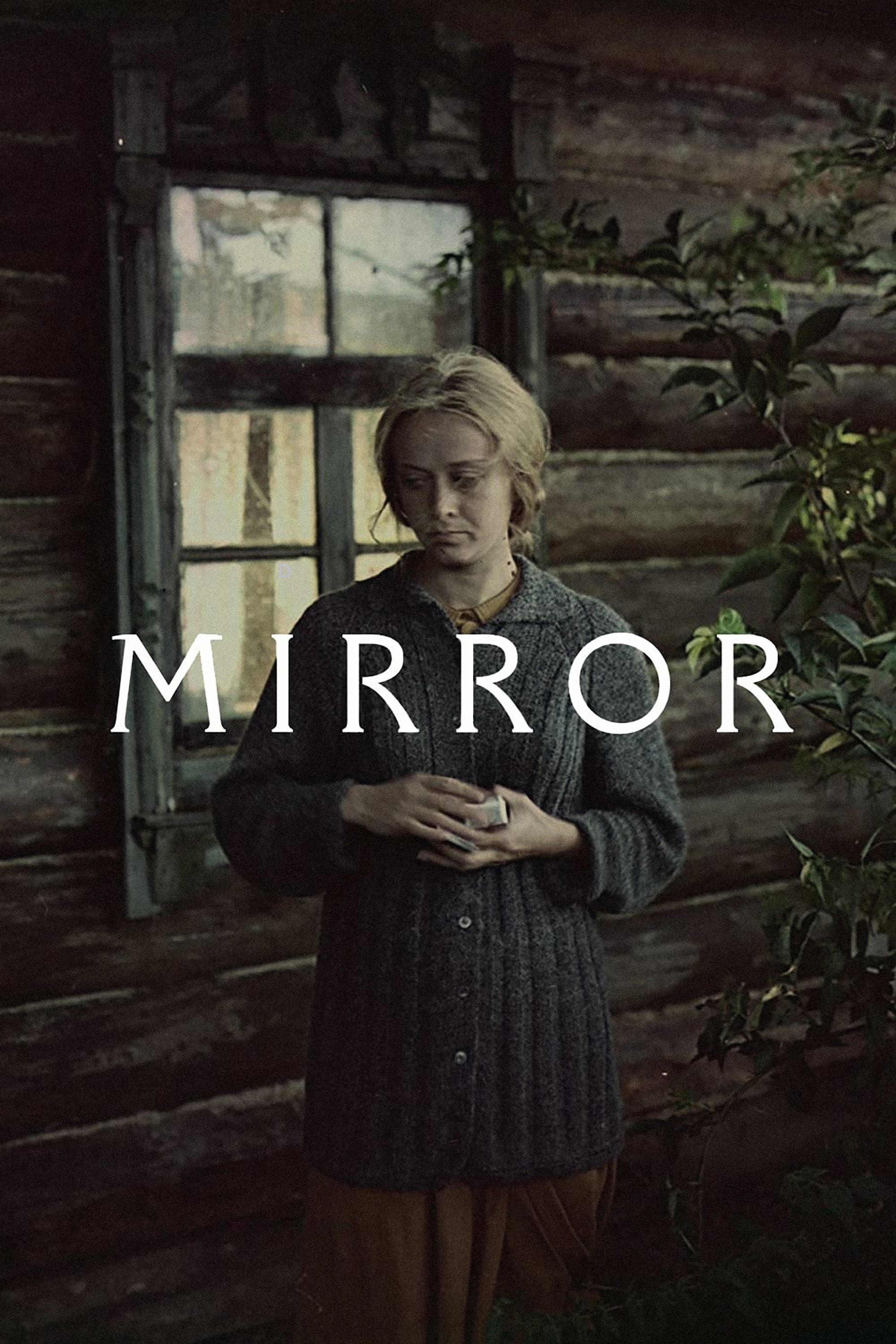
Mirror
1975 · Directed by Andrei Tarkovsky
Original language: Russian
- drama
- history
The story
A dying man in his forties recalls his childhood, his mother, the war and personal moments that tell of and juxtapose pivotal moments in Soviet history with daily life.
What it’s like
Soft, rain-dampened greys and sepia-tinted interiors, with wind moving through grass and birch trees, and a fire-lit dark that feels almost tactile. Tarkovsky's long, slow takes drift between dreamlike memory and sharp documentary newsreel, so a mother's face in a rural farmhouse can give way without warning to flickering war footage. Silence is broken by a water-drop hush, a distant radio, a rustle of pages, and the low, fragile wind that runs through the whole film like breath. The vibe is elegiac, hushed and sorrowful, with a quiet ache of nostalgia and a slow, poetic unease. It suits a rainy afternoon with nothing else on, or a late evening when you want to sit still with something unhurried and strange. The pace is deliberate, often meditative, and the emotional arc follows a dying man turning back over his life, his mother and the past, to find some reconciliation. Intensity is low: war appears only through archival-style images and brief, distant sounds, with no graphic violence, and there is some illness and grief. It is for patient viewers who want art-house poetry and reflection rather than plot.
More films like Mirror
Closest in mood, pacing and theme. Tell us why you loved Mirrorand we’ll explain which ones fit you.