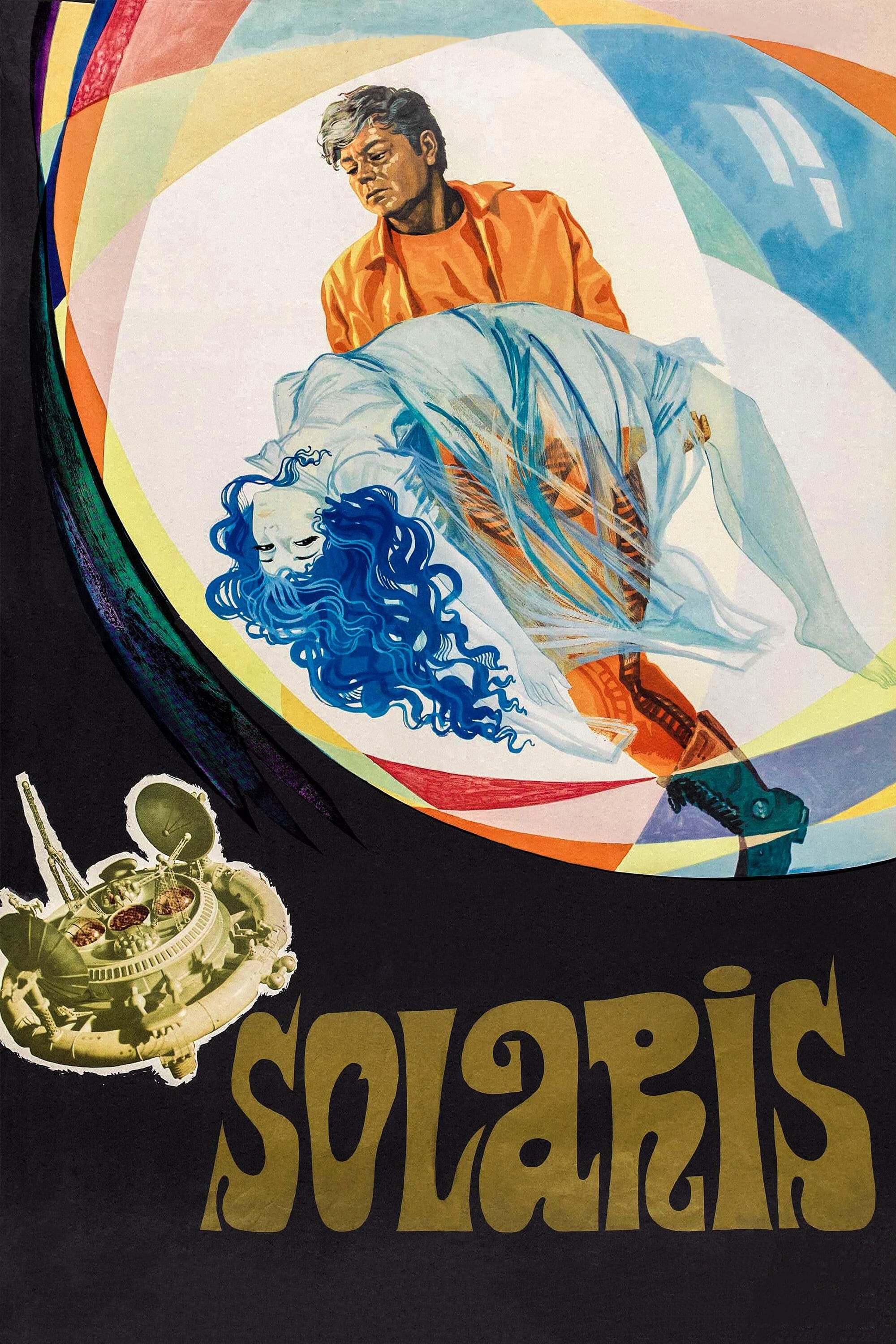
Solaris
1972 · Directed by Andrei Tarkovsky
Original language: Russian
- drama
- science fiction
- mystery
The story
A psychologist is sent to a space station orbiting a planet called Solaris to investigate the death of a doctor and the mental problems of cosmonauts on the station. He soon discovers that the water on the planet is a type of brain which brings out repressed memories and obsessions.
What it’s like
Slow, grey-green and watery: long static takes that linger on rooms of corridors, wood panelling and dim interiors, with the famous sequences of a Soviet car crawling along a motorway and the planet's ocean moving under overcast light. Much of the image is soft and grainy, with lamplit interiors, rain-smeared glass and a haze that makes everything feel half-remembered. The sound is mostly near silence, broken by ambient hum, distant drips and Eduard Artemyev's eerie synthesizer textures, with Bach's chorale prelude swelling at the close. The vibe is melancholy and dreamlike, a slow unease that drifts toward grief. It suits a long, unhurried evening alone, a deliberately quiet night in, or anyone wanting philosophical science fiction that trusts stillness. Pacing is glacial, and the emotional arc follows a weary psychologist forced to confront guilt and a lost wife returned from memory, a grief that gradually turns tender. Gentle in violence: there is almost none, with the dread being psychological and existential rather than graphic. For viewers who want contemplative, patient cinema about memory, love and what we cannot let go of.
More films like Solaris
Closest in mood, pacing and theme. Tell us why you loved Solarisand we’ll explain which ones fit you.