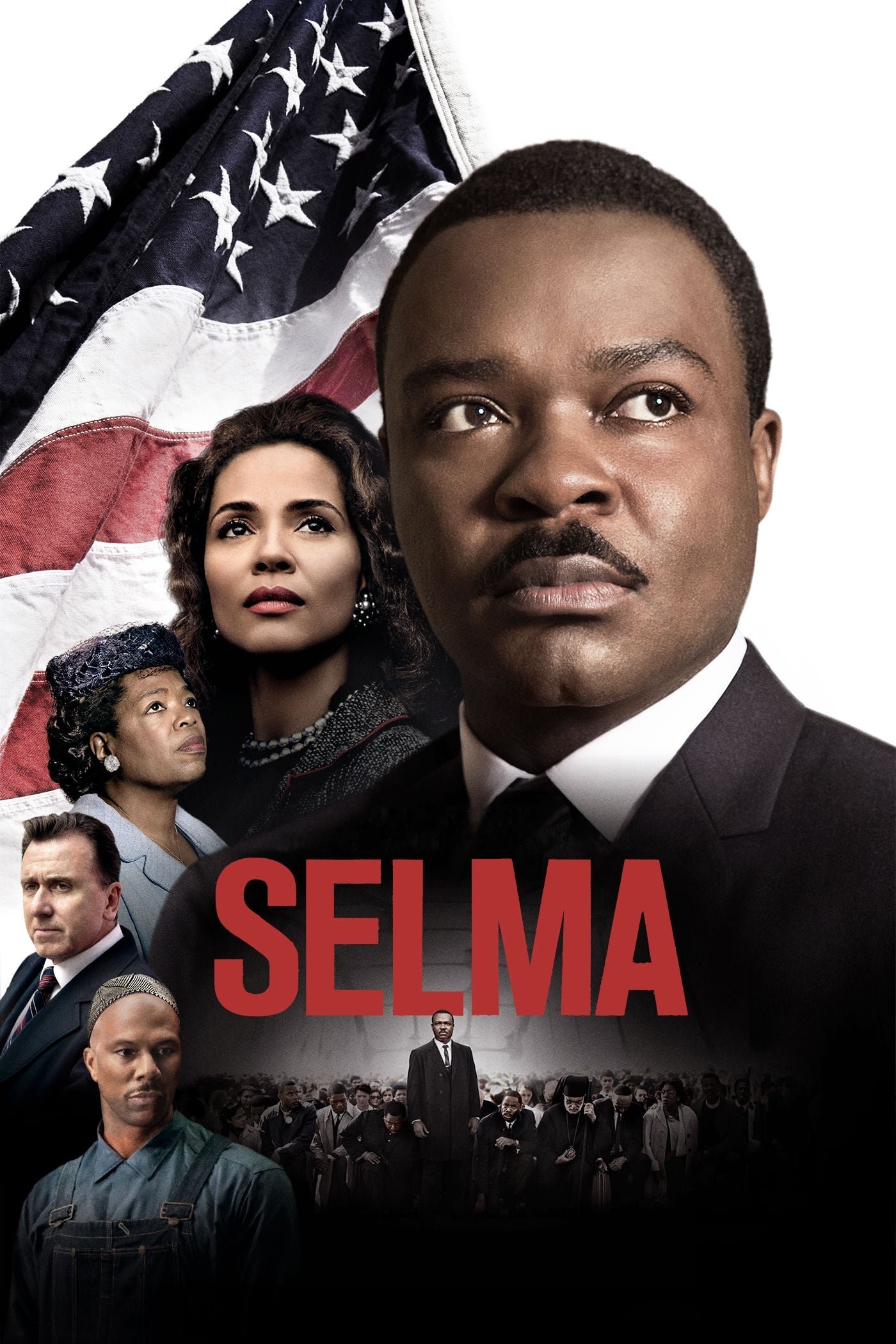
Selma
2014 · Directed by Ava DuVernay
Original language: English
- history
- drama
The story
"Selma," as in Alabama, the place where segregation in the South was at its worst, leading to a march that ended in violence, forcing a famous statement by President Lyndon B. Johnson that ultimately led to the signing of the Voting Rights Act.
What it’s like
Warm, earthy palette with cool shadows in the church interiors, and a restrained, observational camera that lingers on faces in dim rooms, kitchen tables, and sunlit streets. DuVernay favours medium and close framing, handheld movement during the crowd scenes, and long conversational takes that let silence do real work. The Alabama heat and dust feel present, and the marches are rendered with a gritty, documentary immediacy. Ava DuVernay's score is sparse, with gospel-tinged voices and quiet strings rising around speeches and then falling away into ambient room tone. The mood is solemn and determined, a sustained current of resolve rather than despair, with tension building steadily toward confrontation. It suits a focused afternoon or a quiet evening when you want to sit with history rather than be swept along by it. Violence is present and sometimes sudden: the march to Edmund Pettus Bridge includes brutal police beatings and tear gas, shown with real weight but without gratuitous gore. Racial hostility, threats and some profanity run throughout. It follows the organising of the Selma campaign around Martin Luther King Jr., showing how ordinary people and leaders weigh personal risk against the cause. For viewers who want a serious, humane civil rights drama with patient pacing and emotional gravity.
More films like Selma
Closest in mood, pacing and theme. Tell us why you loved Selmaand we’ll explain which ones fit you.