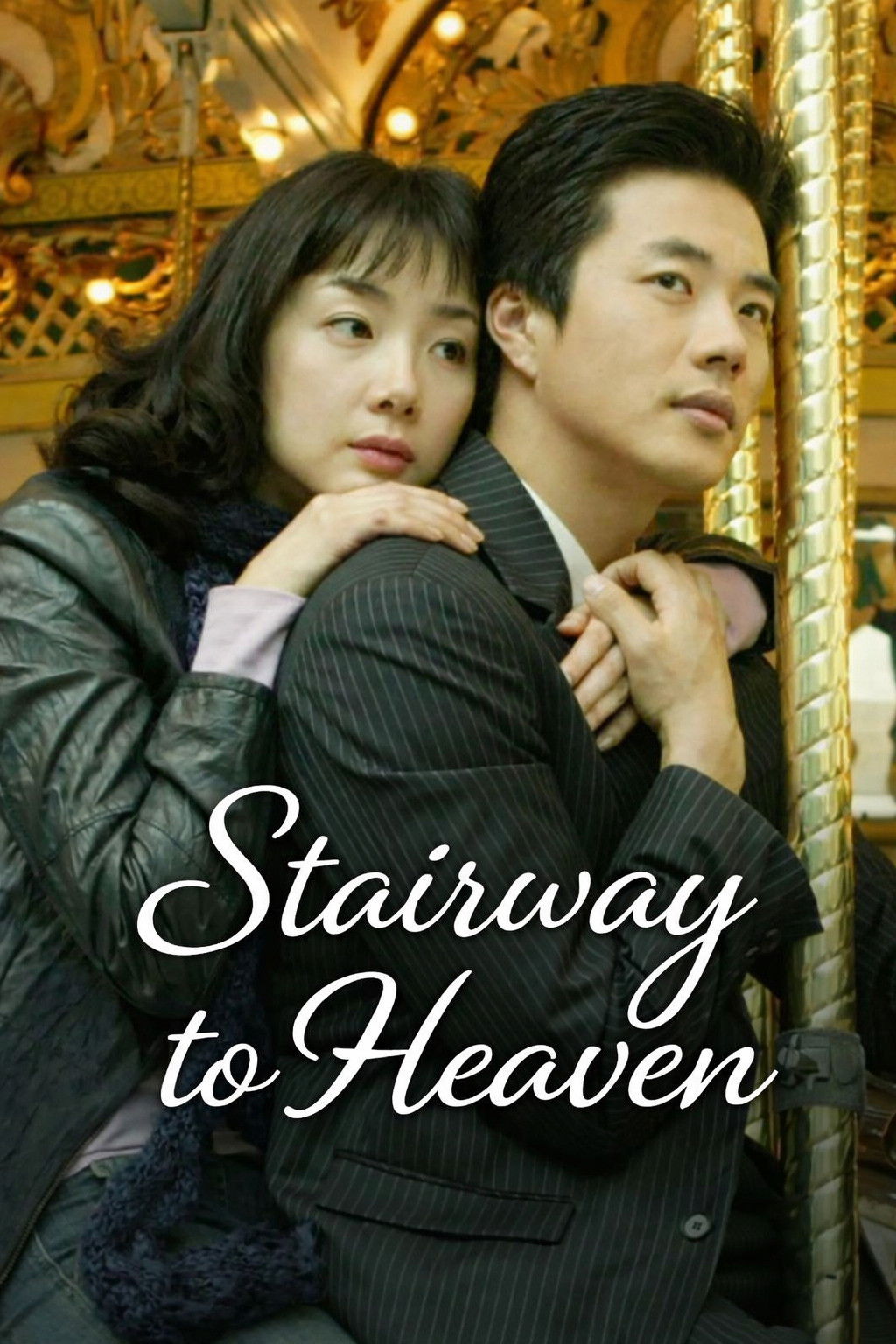
Stairway to Heaven
2003
Original language: Korean
- drama
The story
Song Ju and Jeong Seo who have lost a father and a mother respectively spend their childhood together like real siblings. Song Ju is there for Jeong Seo whenever she feels lonely and has a hard time, and Jeong Seo also relies a lot on Song Ju. However, after Jeong Seo's father gets married to Tae Mi Ra, Mi Ra and her daughter Yu Ri keep harassing Jeong Seo out of jealousy. Tae Hwa, Yu Ri's rough and wild older brother, has a crush on Jeong Seo who is pure and kind unlike him.
What it’s like
Soft-focus close-ups and warm, slightly overexposed interiors give this early-2000s Korean melodrama a dreamy, dated glow, with rain-streaked windows, sunlit school corridors, and lingering shots of faces holding back tears. The score leans on sweeping piano and strings that swell at every confession and parting, while quieter scenes rely on ambient street noise and held silences. The pace is unhurried, with long stretches of longing punctuated by sharp bursts of family conflict and reversals that arrive with a soap opera's timing. Its mood is wistful and sentimental, a blend of tender melancholy and romantic yearning, with the stepfamily cruelty and tangled love triangle keeping the emotional temperature high. The intensity is emotional rather than physical: there is bullying, verbal cruelty, and a few tense confrontations, but no gore, and violence stays brief and mostly off-screen. Expect plenty of crying, dramatic music cues, and sincere affection between its leads. It suits a rainy weekend binge or a nostalgic rewatch for viewers who enjoy old-school Korean romance, and for anyone who wants their heartache served with a full orchestra and very little restraint.
More TV shows like Stairway to Heaven
Closest in mood, pacing and theme. Tell us why you loved Stairway to Heavenand we’ll explain which ones fit you.