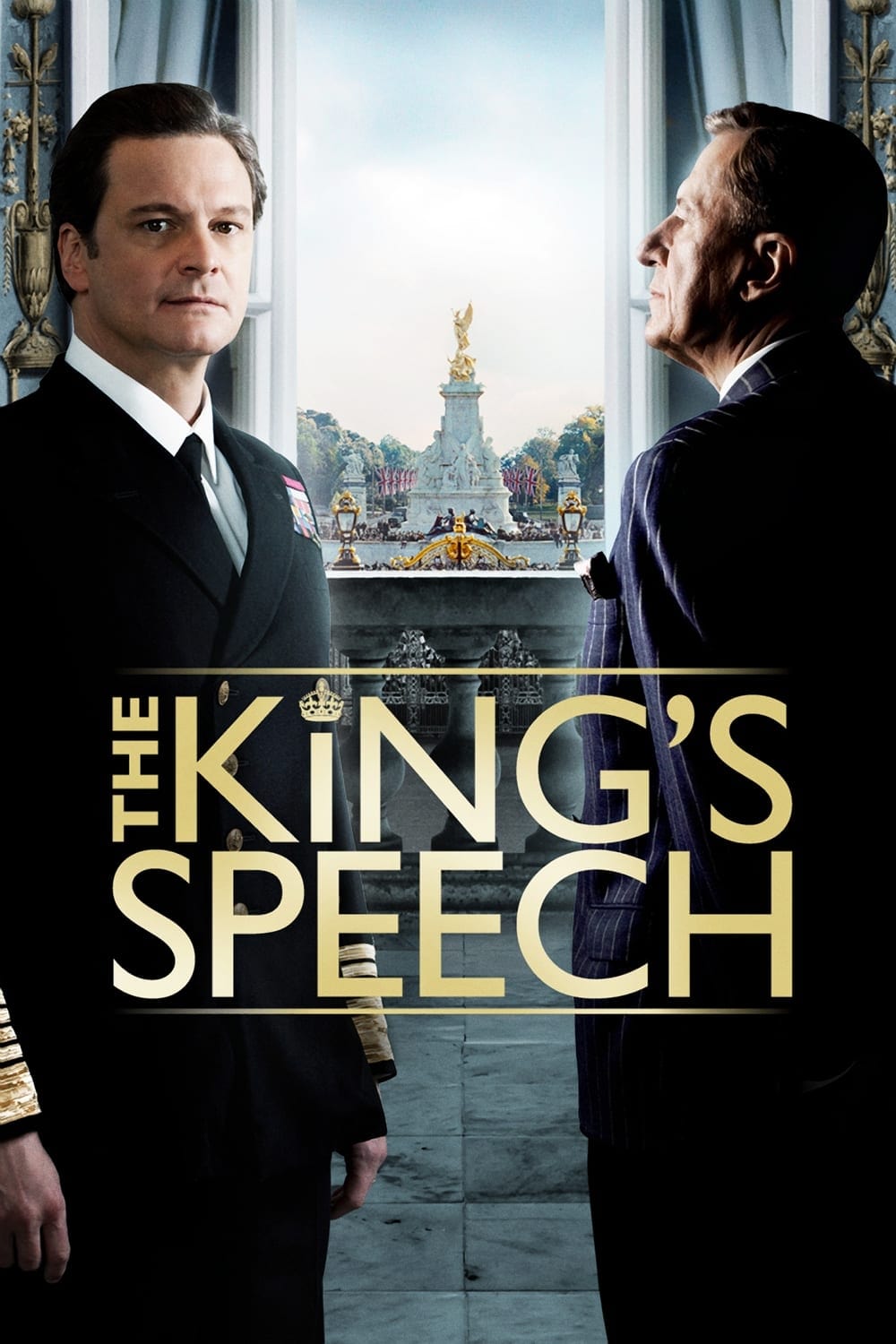
The King's Speech
2010 · Directed by Tom Hooper
Original language: English
- drama
- history
The story
The King's Speech tells the story of the man who became King George VI, the father of Queen Elizabeth II. After his brother abdicates, George ('Bertie') reluctantly assumes the throne. Plagued by a dreaded stutter and considered unfit to be king, Bertie engages the help of an unorthodox speech therapist named Lionel Logue. Through a set of unexpected techniques, and as a result of an unlikely friendship, Bertie is able to find his voice and boldly lead the country into war.
What it’s like
Warm, formal interiors in muted gold and oxblood: palace corridors with heavy drapes, wood-panelled studios, and a London that is grey and rain-smeared in the outdoor scenes, with the period grain of a 1930s world kept soft rather than crisp. Tom Hooper favours tight, close framing on faces and hands, so the camera lingers on a clenched jaw or a trembling mouth, and the rooms feel close and hushed. Sound carries much of the weight: Alexandre Desplat's restrained strings and piano rise under scenes but never swell into spectacle, and the sharpest effects come from silence, microphone hiss, and the awful pause before a word will not come. The vibe is tender, dignified and quietly funny, with a wry edge in the sparring between prince and therapist. It suits a rainy Sunday, a comfort rewatch, or an evening when you want something humane and unhurried. Its people are an unlikely pair slowly building trust across class and temperament, a man learning to be heard. Intensity is low: a few brief moments of wartime tension and some strong language, no gore, no sexual content, and no real violence on screen. It is for viewers who want history as intimate human drama, warm without being sugary.
More films like The King's Speech
Closest in mood, pacing and theme. Tell us why you loved The King's Speechand we’ll explain which ones fit you.