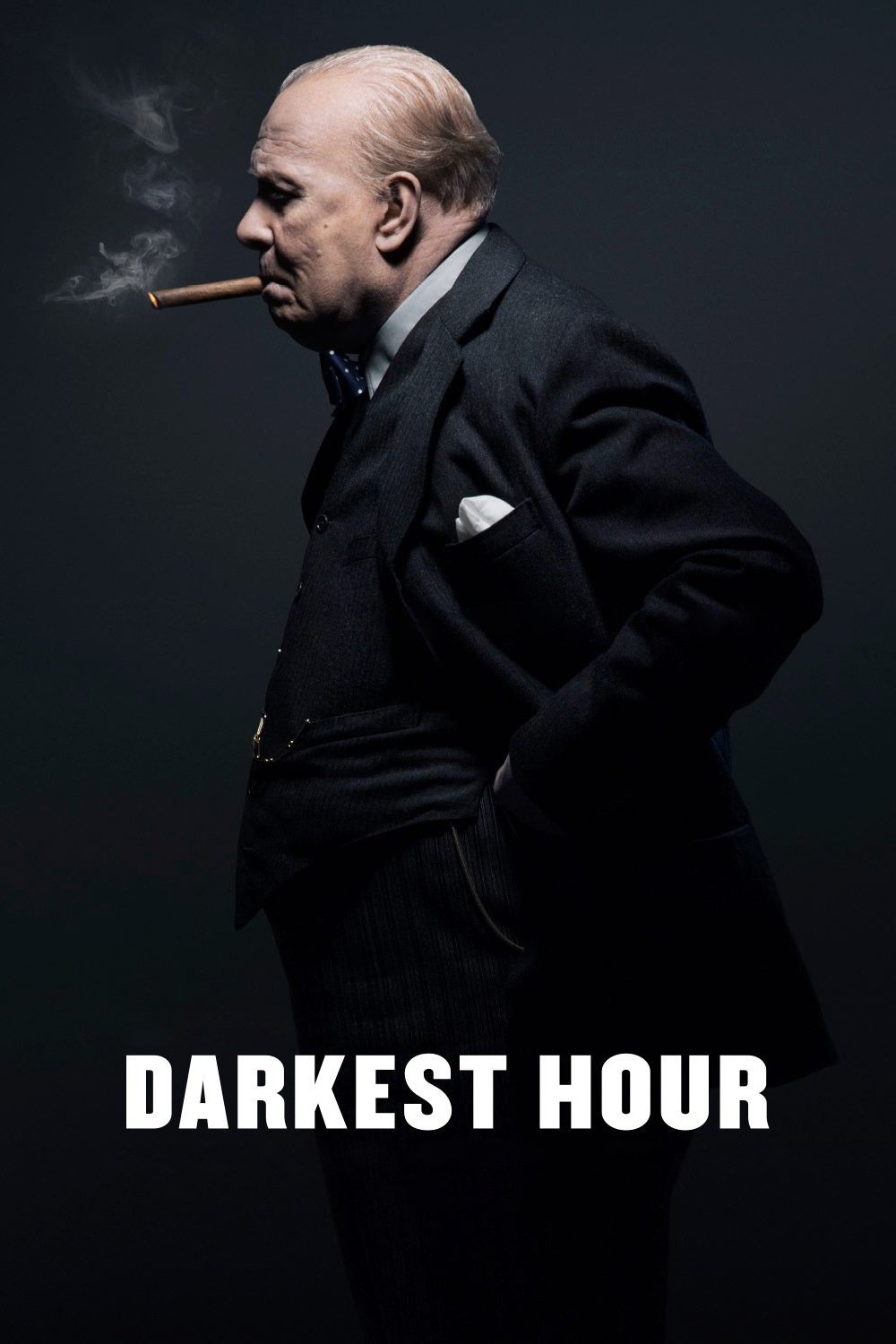
Darkest Hour
2017 · Directed by Joe Wright
Original language: English
- drama
- history
The story
In May 1940, the fate of World War II hangs on Winston Churchill, who must decide whether to negotiate with Adolf Hitler or fight on knowing that it could mean the end of the British Empire.
What it’s like
Warm lamplight against heavy shadow, dense cigarette haze hanging in war-room air, and long, slow tracking shots through the corridors of Westminster and a crowded Tube carriage give this film a claustrophobic, tensely theatrical feel. Its palette runs to amber, bruised browns and washed-out grey daylight, with the camera often pressing close on a single face while the margins blur. Sound is built on a restrained orchestral score that swells only at key moments, with long stretches of murmured negotiation and the clatter of typewriters and telephones filling the rest. The vibe is solemn, stately and wry, tense without being frantic, suited to a quiet evening when you want to sit with history and watch power being weighed in rooms full of rhetoric. The pacing is deliberate, built around conversations and speeches rather than action, and the emotional arc follows a stubborn, ageing statesman wrestling with doubt before finding his resolve. Violence is largely offstage and implied, with only brief, muted glimpses of wartime danger, so it stays gentle in intensity. It suits viewers who enjoy political drama, period detail and character-driven history.
More films like Darkest Hour
Closest in mood, pacing and theme. Tell us why you loved Darkest Hourand we’ll explain which ones fit you.