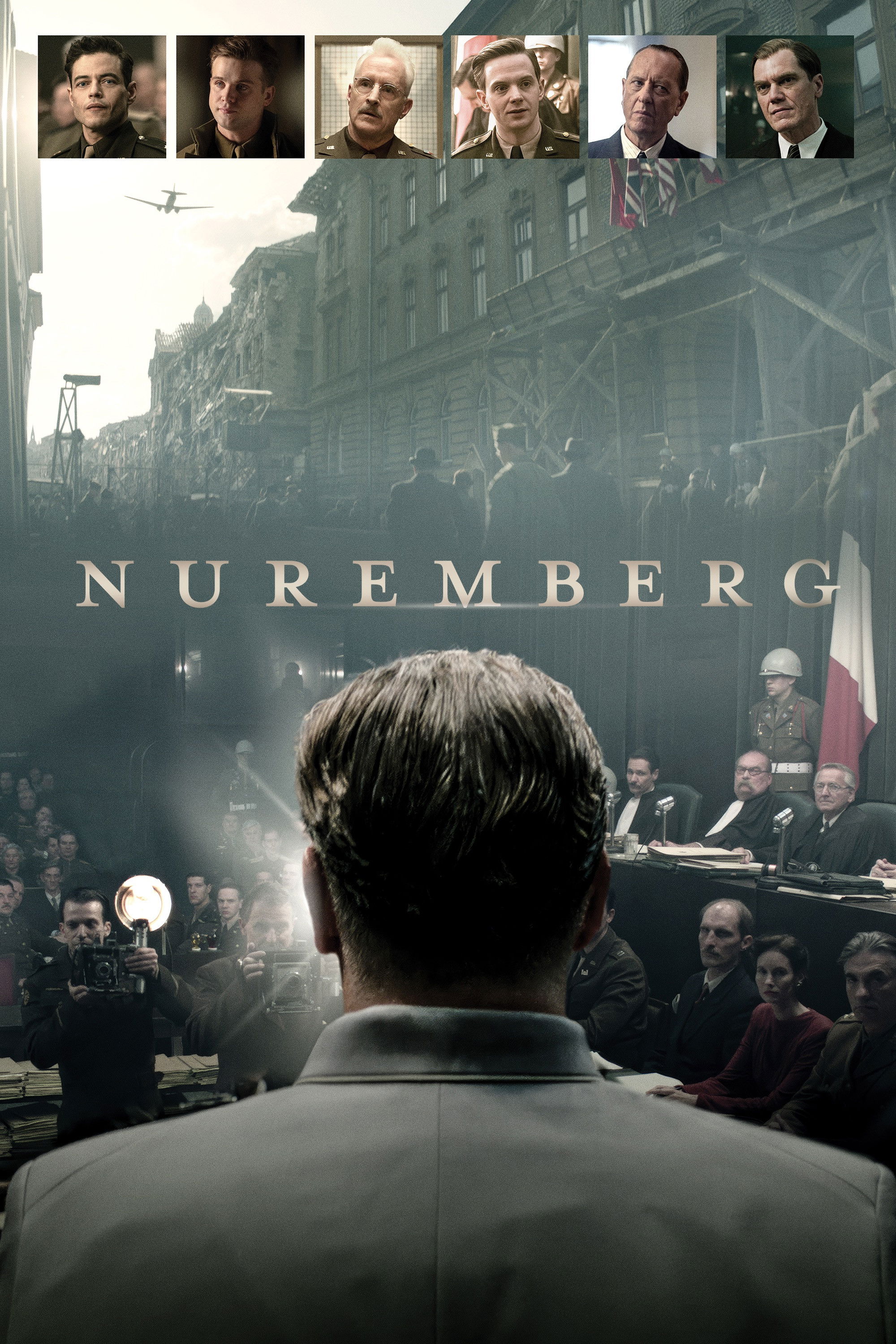
Nuremberg
2025 · Directed by James Vanderbilt
Original language: English
- history
- drama
The story
In postwar Germany, an American psychiatrist must determine whether Nazi prisoners are fit to go on trial for war crimes, and finds himself in a complex battle of intellect and ethics with Hermann Göring, Hitler's right-hand man.
What it’s like
Cold, sober institutional light dominates: fluorescent-lit prison corridors, grey stone courtrooms and dim cells, with a restrained palette of greys, khaki and muted browns that lets the uniforms and faded wartime documents carry the colour. The camera stays measured, mostly static or slowly tracking across rooms of people in conversation, with long two-shots that hold the tension between faces rather than cutting for effect. Sound is spare: the scrape of chairs, footsteps echoing on stone, a low, sparse score that surfaces only at pressure points. The vibe is quiet dread and intellectual unease, a steady, talky simmer that keeps its menace in glances and silences. Violence is largely offscreen and mentioned rather than shown, with the wartime atrocities referenced through testimony and photographs; the tension is psychological and the language is sharp, not graphic. The arc follows a cautious, watchful man slowly confronting how far his own judgement can be trusted. It suits a focused evening in rather than background viewing, for people who enjoy courtroom-style dialogue, historical drama and moral chess between strong performers.
More films like Nuremberg
Closest in mood, pacing and theme. Tell us why you loved Nurembergand we’ll explain which ones fit you.