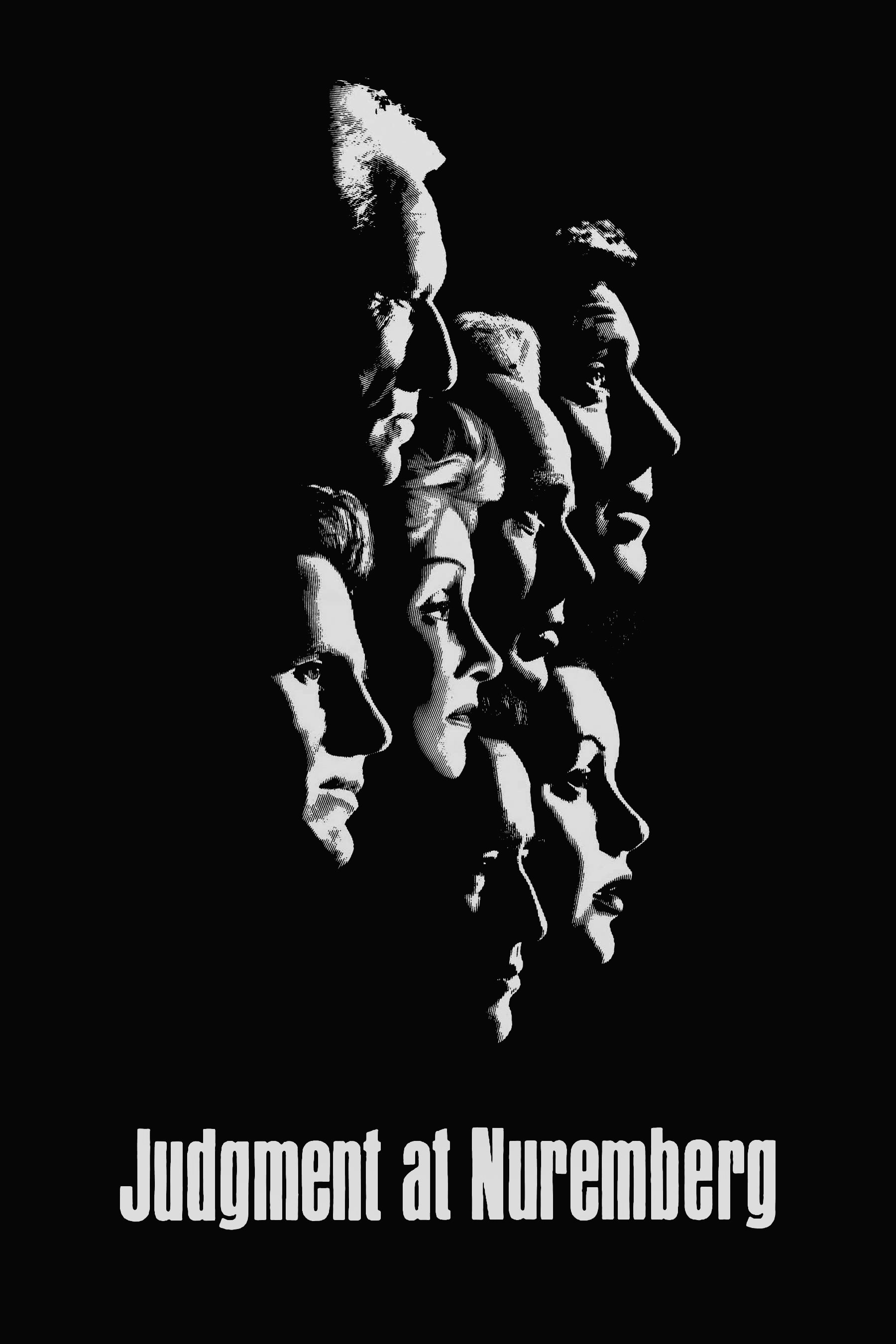
Judgment at Nuremberg
1961 · Directed by Stanley Kramer
Original language: English
- drama
- history
The story
In 1947, four German judges who served on the bench during the Nazi regime face a military tribunal to answer charges of crimes against humanity. Chief Justice Haywood hears evidence and testimony not only from lead defendant Ernst Janning and his defense attorney Hans Rolfe, but also from the widow of a Nazi general, an idealistic U.S. Army captain and reluctant witness Irene Wallner.
What it’s like
Long, mostly static takes of a stark courtroom in black-and-white, its high windows throwing hard, flat daylight across dark wood and rows of somber faces, with the camera settling into close shots that let lined features and tightened hands do the work. The sound is spare: murmured German translated through headphones, the scratch of pens, the occasional flat echo of a gavel, and a restrained score that surfaces only at the most harrowing moments, including newsreel-style footage of the camps rendered with grainy, unflinching clarity. The vibe is grave, contemplative, and morally exacting, a slow accumulation of unease rather than suspense, with dialogue carrying nearly all the weight through its long, measured exchanges. Its pacing is deliberate and talky across a lengthy runtime, and its emotional register stays sober and austere, following an aging judge and a defense-minded lawyer as each is forced to confront complicity and what it means to answer for it. Intensity is moderate: the courtroom is talk-driven, but the wartime archival images of atrocity are brief and devastating, with no gratuitous gore. This suits a rainy weekday evening when you want serious, adult drama, and it's for viewers who value ideas, ethics, and performance over spectacle.
More films like Judgment at Nuremberg
Closest in mood, pacing and theme. Tell us why you loved Judgment at Nurembergand we’ll explain which ones fit you.