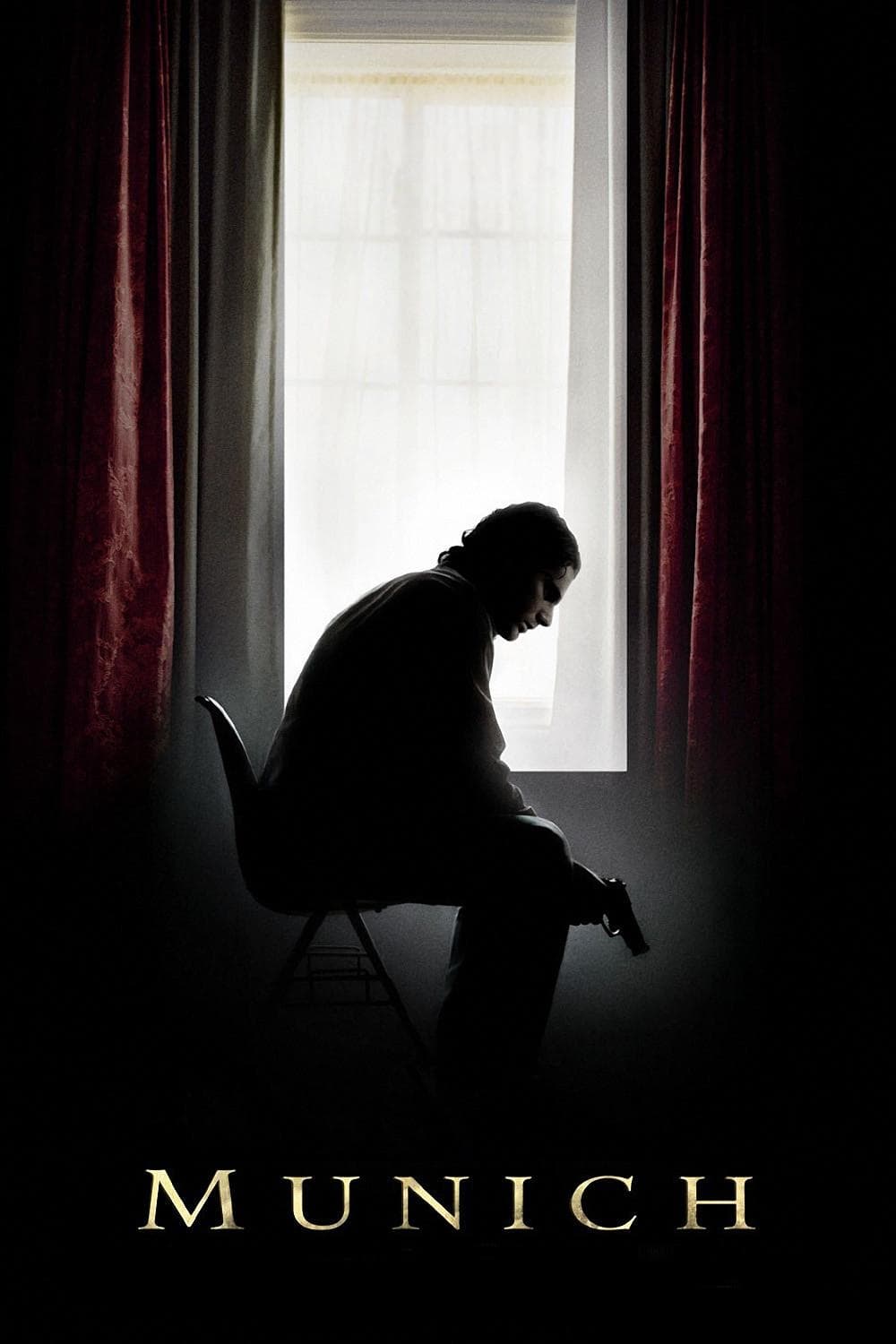
Munich
2005 · Directed by Steven Spielberg
Original language: English
- drama
- history
- thriller
The story
During the 1972 Olympic Games in Munich, eleven Israeli athletes are taken hostage and murdered by a Palestinian terrorist group known as Black September. In retaliation, the Israeli government recruits a group of Mossad agents to track down and execute those responsible for the attack.
What it’s like
Muted European interiors and grey, overcast streets, shot in a restrained, documentary-leaning style with handheld camera that drifts close to faces and lingers on hotel rooms, safe houses and kitchen tables lit by lamps and weak daylight. The palette is desaturated: ochres, rain-dark stone, cold blues at night, with occasional warmth in domestic scenes that feels fragile rather than comforting. The score by John Williams is sparse and mournful, with long stretches of ambient street noise, ticking clocks and quiet dialogue. Pacing is deliberate and talky, broken by sudden, sharp bursts of violence that are brief, unflinching and often shot from a distance or cut away from, so the dread lingers longer than the gore. Vibe: sober, weary, morally uneasy. It suits a late, quiet evening when you want something serious and absorbing rather than escapist. Its people are men slowly eroded by their orders, drifting from certainty into doubt and paranoia, and the emotional register is grave and reflective throughout. Intensity: moderate to high; there is violence and killing, some of it sudden and bloody, plus frequent tension, grief and a few sexual references. Not gentle. Best for viewers drawn to adult political thrillers and character-driven drama who can sit with ambiguity and sorrow.
More films like Munich
Closest in mood, pacing and theme. Tell us why you loved Munichand we’ll explain which ones fit you.