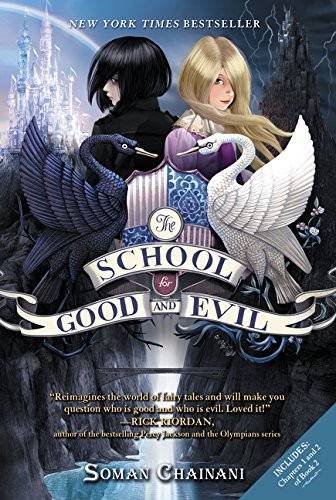
The School for Good and Evil
2007
- magic
- juvenile fiction
- fiction
- fairy schools
- schools
- identity (psychology) in children
- friendship
- good and evil
- fantasy
- children's fiction
The story
**A dark and enchanting fantasy adventure perfect for those who prefer their fairytales with a twist. The first in the bestselling School for Good and Evil series.** Every four years, two girls are kidnapped from the village of Gavaldon. Legend has it these lost children are sent to the School for Good and Evil, the fabled institution where they become fairytale heroes or villains. With her glass slippers and devotion to good deeds, Sophie knows she'll join the ranks of past students like Cinderella, Rapunzel, and Snow White at the School for Good. Meanwhile, Agatha, with her shapeless black dresses and wicked black cat, seems a natural fit for the villains in the School for Evil. But the two girls soon find their fortunes reversed – Sophie's dumped in the School for Evil to take Uglification, Death Curses and Henchmen Training, while Agatha finds herself in the School for Good, thrust among handsome princes and fair maidens for classes in Princess Etiquette and Animal Communication. But what if the mistake is actually the first clue to discovering who Sophie and Agatha really are?
What it’s like
Bright, storybook-candy surfaces over a gothic undertow: pastel castle courtyards and glittering ballroom gowns set against the damp grey of a village wood and the sooty stone of a dark-walled school. The prose is brisk, playful and funny, with a chatty third-person voice that lands jokes about princesses, poison apples and curses, and the sound of the page is full of mock-grand names and sly asides. Its vibe is whimsical with a sharp edge, the kind of bright-dark fairytale that suits a rainy afternoon, a lazy weekend read, or a sleepover-style comfort reread. The pace is quick and chapter-driven, built on reversals and small reveals. The emotional core is two prickly, lonely girls who have been measured by their looks and their stories, slowly discovering that who they are isn't what the story assigned them, and that friendship can be an unexpected kind of rescue. Intensity is mild: fairy-tale peril, nasty teachers, curses and mischief, with some dark whimsy and cruelty between students but no graphic gore and no sexual content. It suits young readers and adults who enjoy witty middle-grade fantasy and want cleverness and warmth over grimness.
More books like The School for Good and Evil
Closest in mood, pacing and theme. Tell us why you loved The School for Good and Eviland we’ll explain which ones fit you.