WALL·E
2008 · Directed by Andrew Stanton
Original language: English
- animation
- family
- science fiction
The story
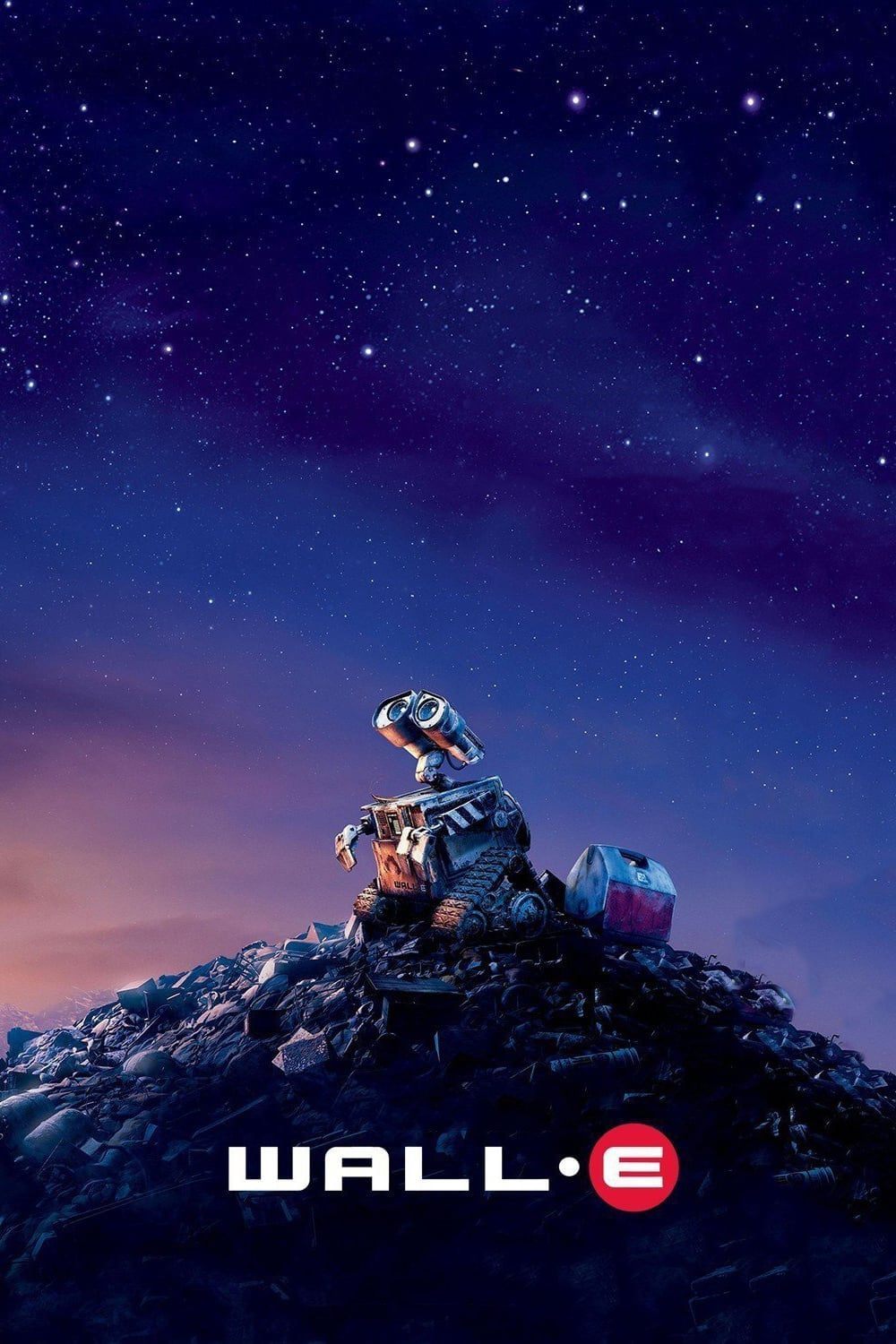
After hundreds of years doing what he was built for, WALL•E— a robot designed to clean up the earth—discovers a new purpose in life when he meets a sleek search robot named EVE. EVE comes to realize that WALL•E has inadvertently stumbled upon the key to the planet's future, and races back to space to report to the humans. Meanwhile, WALL•E chases EVE across the galaxy and sets into motion one of the most imaginative adventures ever brought to the big screen.
What it’s like
Warm, dusty, and quietly lonely, with a palette of rust orange, ochre and washed-out brown across a wrecked future Earth, then a gleaming clinical white once the story lifts into space. The early stretches are nearly wordless: long, patient shots of a small tracked robot sorting refuse among towering trash stacks, with light filtering through haze at golden hour and the camera letting ordinary objects linger. Sound carries much of the feeling: the chirp and whirr of tiny machines, a bright old-fashioned musical score by Thomas Newman, and near silence in the empty city. The pace is unhurried at first and then opens into exuberant, slapstick-tinged momentum once the robots reach the starship, with a final stretch of big, warm sweep. Emotionally it moves from solitude toward tenderness, following an isolated machine learning how to reach out to another and a lazy, forgotten humanity learning to stand up again. Violence is absent; peril is mild and cartoonish, with no gore, and the sensuality is limited to a single brief kiss-like gesture. Its intensity is gentle throughout. Made for families and for adults who want a reflective, hopeful story told mostly through looks and sounds, and it rewards a rainy Sunday or a comfort rewatch.
More films like WALL·E
Closest in mood, pacing and theme. Tell us why you loved WALL·Eand we’ll explain which ones fit you.