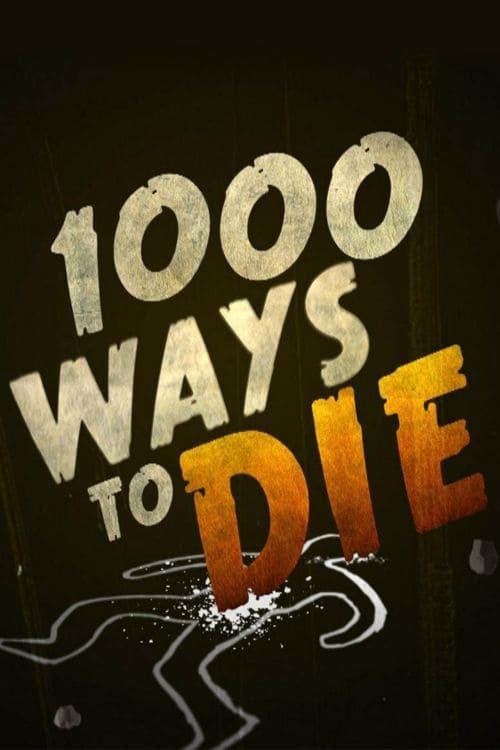
1000 Ways to Die
2009
Original language: English
- documentary
- comedy
The story
The science of living and the randomness of death are combined with a dash of Darwinism. Forensic experts, pathologists, toxicologists, herpetologists, and other experts offer eloquent explanations of mortality.
What it’s like
Flat, well-lit reconstructions and grainy archive footage, with a tongue-in-cheek narrator's voice (Ron Perlman's gravelly, faintly amused delivery) carrying each segment. Each episode is a brisk run of short, self-contained vignettes, cut together with dramatic reenactments in saturated, slightly overlit colour, then pulled back to talking-head experts in plain offices and labs who explain the biology with calm precision. Sound is mostly a bouncing library score, stingers and ticking-clock beats that keep the mood playful even when the subject is grim. The vibe is macabre but deadpan, closer to a late-night curiosity than a thriller: morbid trivia delivered with a wink. Deaths are described and occasionally shown in reenactment, with some blood and sudden violence, but the tone stays clinical and jokey rather than lingering, and nothing is dwelt on for long. It suits a lazy evening, background viewing while doing something else, or a friend group that enjoys dark humour. Recommended for people who like true-crime-adjacent oddity and gallows humour, not for anyone wanting gentle or emotionally heavy content.
More TV shows like 1000 Ways to Die
Closest in mood, pacing and theme. Tell us why you loved 1000 Ways to Dieand we’ll explain which ones fit you.