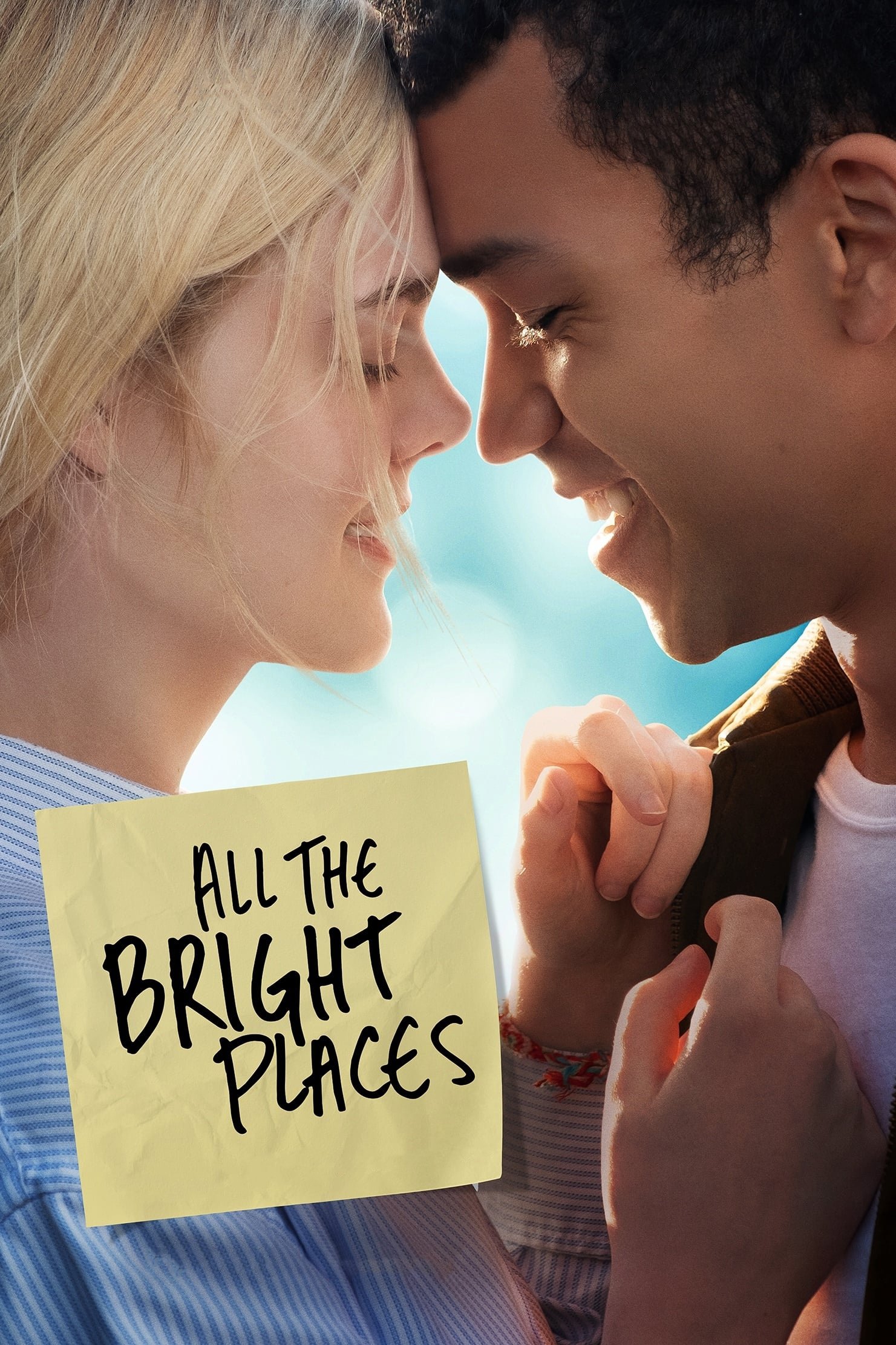
All the Bright Places
2020 · Directed by Brett Haley
Original language: English
- romance
- drama
The story
Two teens facing personal struggles form a powerful bond as they embark on a cathartic journey chronicling the wonders of Indiana.
What it’s like
Soft, washed-out daylight on small-town Indiana: flat fields, gray-green winter trees, school hallways under fluorescent tubes, and road-trip stretches shot with a handheld, unhurried camera that lingers on faces and roadside details. The palette leans muted and cool, warming only in the bright, open moments of the couple's drives and in the sunlit warmth of a shared photo or a quiet porch. Sound is restrained: a gentle piano-based score, long pauses, and ambient road and wind noise that gives the story room to breathe. The mood is wistful and tender, with an undercurrent of grief that never fully lifts, best suited to a slow, reflective evening rather than background watching. Pacing is measured, and the emotional arc follows two young people, both carrying heavy private pain, slowly finding comfort and courage in each other. Intensity is moderate: the story deals directly with depression, suicide, and trauma, including discussion and a few difficult scenes, but there is no graphic gore or explicit violence. It suits viewers who want an emotionally honest, bittersweet romance about mental health and loss, and it is not a good fit for anyone seeking something light or gentle.
More films like All the Bright Places
Closest in mood, pacing and theme. Tell us why you loved All the Bright Placesand we’ll explain which ones fit you.