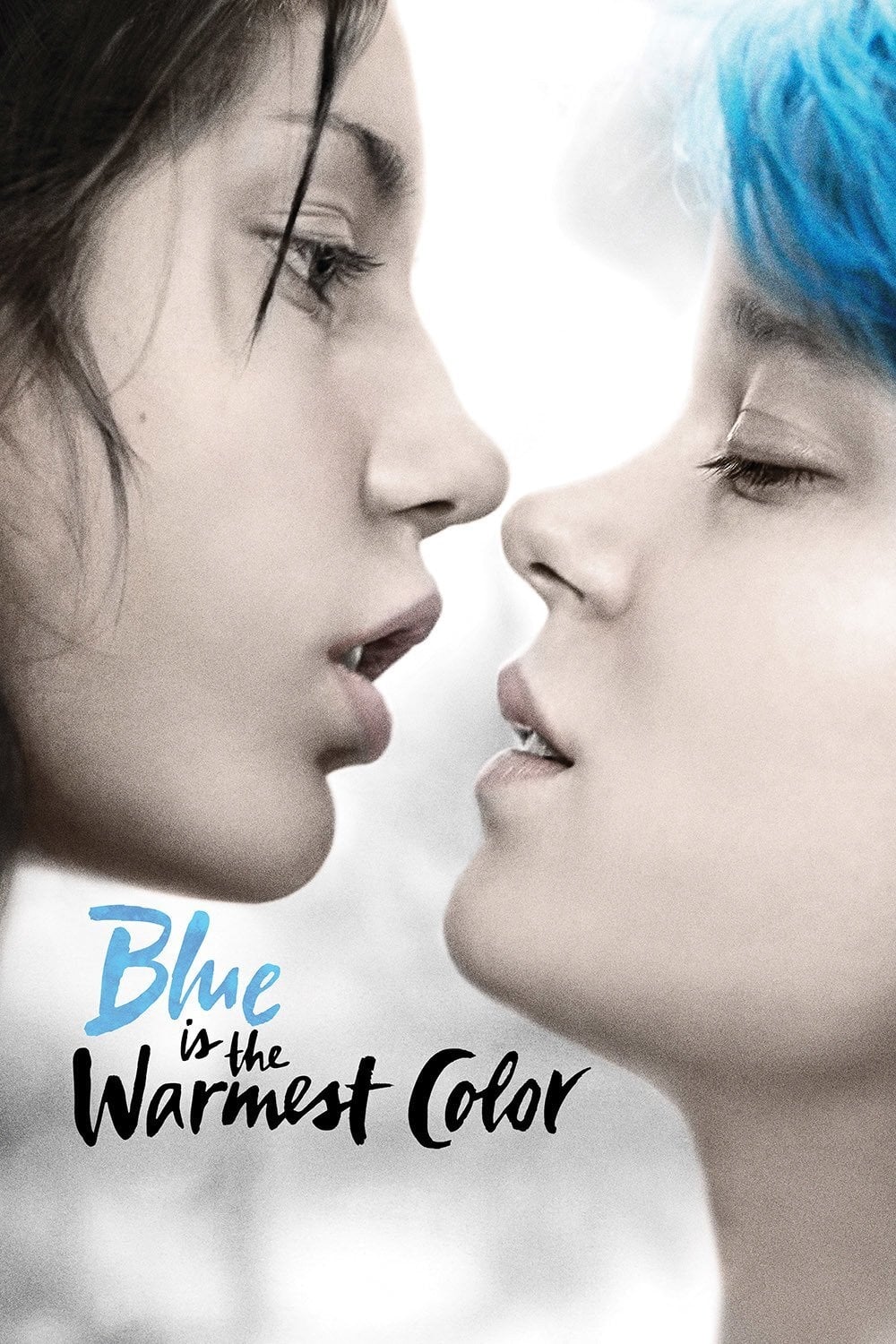
Blue Is the Warmest Color
2013 · Directed by Abdellatif Kechiche
Original language: French
- romance
- drama
The story
Adèle's life is changed when she meets Emma, a young woman with blue hair, who will allow her to discover desire, to assert herself as a woman and as an adult. In front of others, Adele grows, seeks herself, loses herself, finds herself.
What it’s like
Handheld and tightly framed, the camera sits almost on top of its two lead actors, so faces, hands and skin fill the screen in long, unbroken takes under natural daylight, café windows, and warm lamplit bedrooms. The palette runs from cool blues in the early scenes to honeyed ambers and dusky reds as the story deepens, with Emma's blue hair as the one saturated accent in the frame. Dialogue overlaps and drifts the way real conversation does, and the score is sparse, mostly silence broken by a few quiet piano phrases. The mood is intimate and bittersweet, with a melancholy that comes from watching something tender slowly change. The pace is unhurried and runs close to three hours, the rhythm of the long afternoon rather than of plot. Its intensity is high: there are extended, explicit sex scenes, and it also contains homophobic remarks, classroom and family cruelty, and emotional breakdowns. There is no gore or action violence. It suits a quiet night alone or a late-evening watch for people who want a raw, absorbing portrait of first love, desire and self-discovery, and who can handle its frankness.
More films like Blue Is the Warmest Color
Closest in mood, pacing and theme. Tell us why you loved Blue Is the Warmest Colorand we’ll explain which ones fit you.