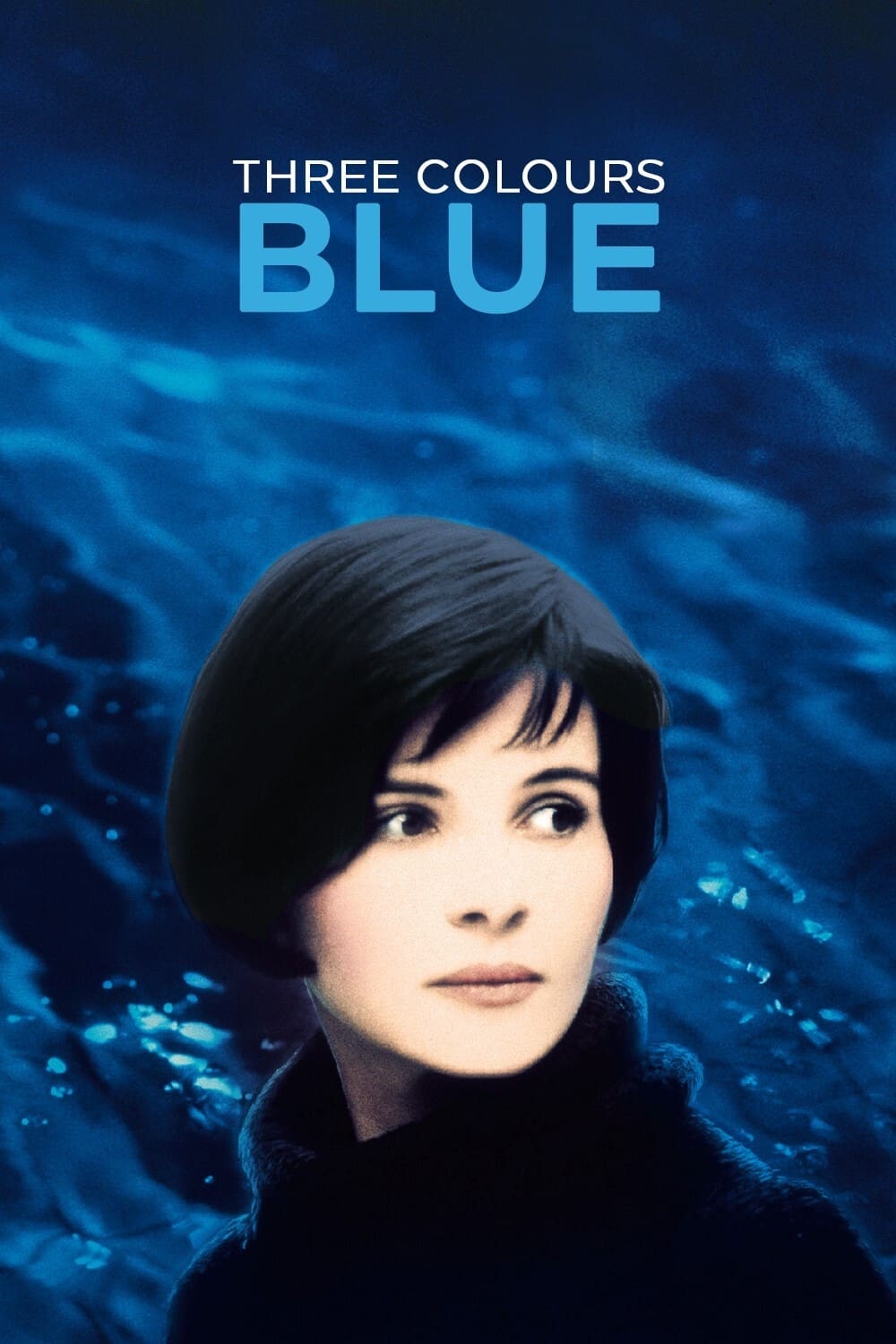
Three Colors: Blue
1993 · Directed by Krzysztof Kieślowski
Original language: French
- drama
The story
The wife of a famous composer survives a car accident that kills her husband and daughter. Now alone, she shakes off her old identity and explores her newfound freedom but finds that she is unbreakably bound to other humans, including her husband’s mistress, whose existence she never suspected.
What it’s like
Cool, luminous blues dominate nearly every frame of this 1993 French drama: a swimming pool shimmering through a glass wall, a chandelier's glass beads catching light, a bruised twilight over Paris. Kieślowski frames Juliette Binoche in tight, quiet close-ups and long unhurried takes, with the camera often lingering on her face as grief turns to something harder to name. Sound is central: Zbigniew Preisner's orchestral score swells and hushes in measured phrases, and the film's most affecting passages rely on silence, the hum of a room, or a single note. The mood is austere, melancholy and dreamlike, with moments of sharp, quiet wit and a slow thaw toward human connection. Violence is limited to the opening car crash and a brief, unsensational sense of loss; there is nudity and some sexual content, handled non-explicitly. It suits a solitary evening, a slow rainy night, or a patient cinephile's rewatch, and will reward viewers who want contemplative, emotionally precise European cinema over plot-driven thrills. A widow slowly learns that freedom from the past is not the same as being free of other people.
More films like Three Colors: Blue
Closest in mood, pacing and theme. Tell us why you loved Three Colors: Blueand we’ll explain which ones fit you.