Citizenfour
Directed by Laura Poitras
- documentary
The story
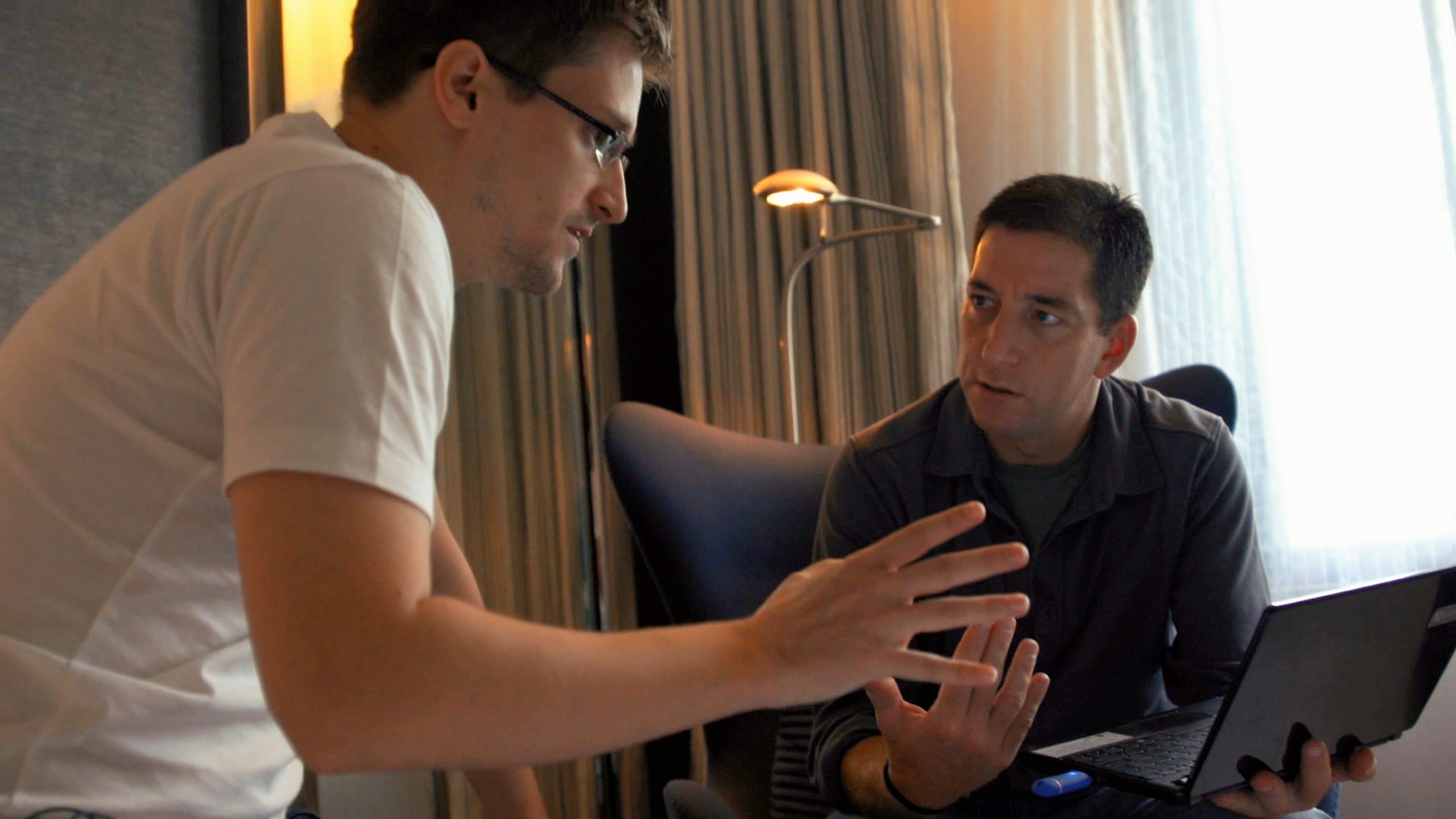
In June 2013, Laura Poitras and reporter Glenn Greenwald flew to Hong Kong for the first of many meetings with Edward Snowden. She brought her camera with her.
What it’s like
Tight, claustrophobic interiors do most of the work here: a Hong Kong hotel room with drawn curtains, a lamp-lit corner, laptops glowing blue in dim light, the camera held close and often handheld so the frame trembles with anxiety. Much of it is observational documentary, with long unbroken takes of people talking, typing, pausing and rubbing their eyes, while a sparse, almost absent soundtrack leaves room for the hum of air conditioning, rustling paper and the tap of keys. Its vibe is tense, watchful and quietly paranoid, the feel of late nights where every knock on the door registers. The pacing is deliberate and conversational rather than thriller-fast, and the emotional register stays sober and intimate, following a shy, earnest figure who takes a frightening step and a small circle of people trying to hold steady around him. Intensity is low on violence and gore; the unease comes from talk of surveillance, government reach and personal risk rather than physical danger. It suits a rainy evening or a late night alone for viewers who want real-world tension, ideas about privacy and power, and the textured stillness of a documentary built from a single room.
More films like Citizenfour
Closest in mood, pacing and theme. Tell us why you loved Citizenfour and we’ll explain which ones fit you.