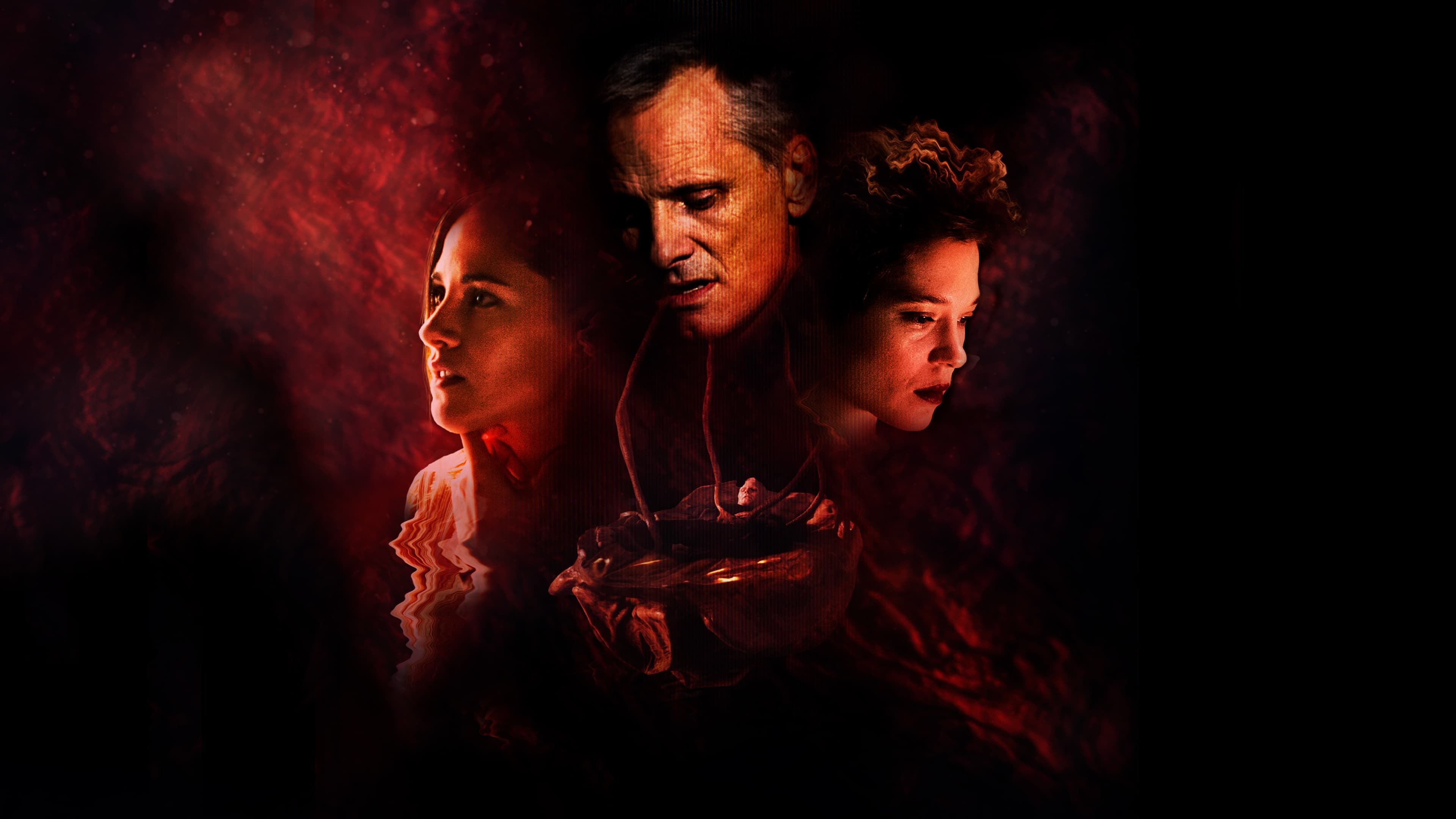
Crimes of the Future
Directed by David Cronenberg
- science fiction
- horror
- thriller
The story
With his partner Caprice, celebrity performance artist Saul Tenser publicly showcases the metamorphosis of his organs in avant-garde performances. An investigator from the National Organ Registry obsessively tracks their movements, which is when a mysterious group is revealed... Their mission — to use Tenser's notoriety to shed light on the next phase of human evolution.
What it’s like
Washed-out greys and bruised ochres, interiors lit by cold overhead fluorescents and the dull glow of hospital-grade lamps, with the rust and grime of a decommissioned shipyard giving the dystopian city a tired, industrial texture. Cronenberg frames his people in patient, static compositions that hold on faces and bodies as they are cut, examined and displayed, so the body-horror imagery lands through stillness rather than jump scares. The score is sparse and droning, with long stretches of near silence broken by wet, clinical sounds of surgical tools and bodies. Its vibe is clinical unease with a dry, deadpan wit, a film to sit with late at night when you want to feel unsettled but intellectually engaged. Pacing is slow and deliberate, and the emotional register stays cool and detached. A lonely performer and his partner drift through a relationship shaped by spectacle and grief, while an investigator becomes gradually more entangled with them. Intensity is high: frequent graphic surgical and bodily violence, gore, and disturbing, unsettling imagery, though not relentless. Not for anyone seeking gentle viewing. Made for viewers who enjoy cerebral, provocative science fiction and can tolerate explicit body horror.
More films like Crimes of the Future
Closest in mood, pacing and theme. Tell us why you loved Crimes of the Future and we’ll explain which ones fit you.