Dune II: The Building of a Dynasty
1992
- real time strategy (rts)
- strategy
- science fiction
- single player
The story
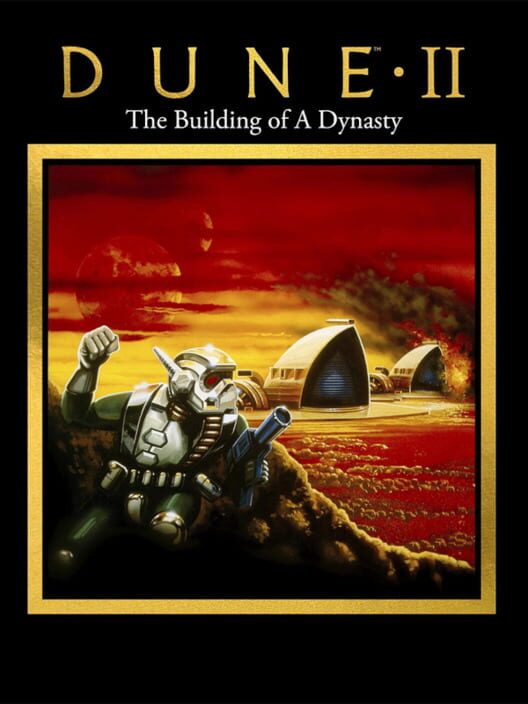
Dune II is often considered the first mainstream modern real-time strategy game and established many conventions of the genre. Even though set in Frank Herbert's famous Dune universe, the game is only loosely connected to the plot of any of the books or the films based from them. Controlling either of the three Houses, the player must fight a number of battles against the other Houses. In the early levels, the goal is simply to earn a certain number of credits, while in the later missions, all enemies must be destroyed. The single resource in the game is the Spice, which must be collected by harvesters. The spice is converted to credits in a refinery, which are then spent to construct additional buildings and units. There are two terrain types: buildings can only be constructed on stone, while the Spice is only found on sand. However, units moving on sand attract the large sandworms of Dune, who are virtually indestructible and can swallow even large units whole. As levels progress, new and more advanced buildings and units are made available, including structures like a radar station, a repair facility or defense turrets and, for units, various ground troops, light vehicles and tanks. Each House can construct one unique special unit, and, after building a palace improvement, can unleash a unique palace effect.
What it’s like
Dusty ochre sand fills a top-down map in chunky early-90s VGA pixel art, with grey stone slabs for building sites and a sidebar of stark, bevelled icons along the edge. The palette stays mostly warm and sun-bleached, and the screen flickers with small bursts of gunfire and explosions when armies clash. The score is a sparse, tinny synth loop that repeats under long stretches of quiet planning, so the mood is patient and watchful. Sand is never just scenery: a harvester crawling across it raises the dread of a sandworm's sudden shadow, and that low, creeping tension runs through every mission. Pacing is deliberate. Early levels ask you to gather a set amount of spice, and later ones build into sprawling, crowded fights where units trickle onto the map. Violence is abstract and bloodless, with destroyed vehicles and buildings collapsing into smoke and no gore, sexual content, or cruelty. The feeling is methodical, slightly austere, and quietly satisfying, like tending a fragile economy under a huge sky. It suits a slow weekend afternoon, a retro comfort session, or anyone curious about where real-time strategy began. It is for players who enjoy resource management, careful expansion, and the slow build toward a decisive push.
More games like Dune II: The Building of a Dynasty
Closest in mood, pacing and theme. Tell us why you loved Dune II: The Building of a Dynastyand we’ll explain which ones fit you.