Into the Wild
1996
- adventure and adventurers
- travelers
- journeys
- wayfaring life
- hitchhiking
- nonfiction
- discovery and exploration
- travel
- biography
- alaska and the west
The story
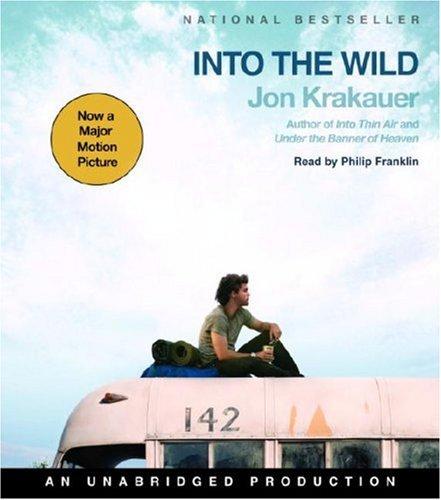
In April 1992 a young man from a well-to-do family hitchhiked to Alaska and walked alone into the wilderness north of Mt. McKinley. His name was Christopher Johnson McCandless. He had given $25,000 in savings to charity, abandoned his car and most of his possessions, burned all the cash in his wallet, and invented a new life for himself. Four months later, his decomposed body was found by a moose hunter. How McCandless came to die is the unforgettable story of I*nto the Wild*. Immediately after graduating from college in 1991, McCandless had roamed through the West and Southwest on a vision quest like those made by his heroes Jack London and John Muir. In the Mojave Desert he abandoned his car, stripped it of its license plates, and burned all of his cash. He would give himself a new name, Alexander Supertramp, and , unencumbered by money and belongings, he would be free to wallow in the raw, unfiltered experiences that nature presented. Craving a blank spot on the map, McCandless simply threw the maps away. Leaving behind his desperate parents and sister, he vanished into the wild. Jon Krakauer constructs a clarifying prism through which he reassembles the disquieting facts of McCandless's short life. Admitting an interst that borders on obsession, he searches for the clues to the dries and desires that propelled McCandless. Digging deeply, he takes an inherently compelling mystery and unravels the larger riddles it holds: the profound pull of the American wilderness on our imagination; the allure of high-risk activities to young men of a certain cast of mind; the complex, charged bond between fathers and sons. When McCandless's innocent mistakes turn out to be irreversible and fatal, he becomes the stuff of tabloid headlines and is dismissed for his naivete, pretensions, and hubris. He is said to have had a death wish but wanting to die is a very different thing from being compelled to look over the edge. Krakauer brings McCandless's uncompromis
What it’s like
Lean, reportorial prose with a restless, searching undertow: short declarative sentences giving way to long, probing paragraphs of motive and memory. The book's world is open country seen through a travelogue lens, with the Mojave's bleached heat, the grey-green sweep of Alaskan tundra, and the cold, spare interior of a bush camp rendered in plain, precise detail rather than lyrical description. Its mood is melancholy and watchful, with a current of unease that builds as the facts accumulate. Reading it suits a rainy weekend, a long-haul flight, or a late night when you want something absorbing but not cosy. Pacing is steady and investigative, moving between the young man's journey, interviews with the people he met along the road, and the author's own reflections, so the arc is less a single plunge than a slow accumulation of portraits. The emotional register is grief-tinged and curious, shaped around a restless son and the family he left behind. Intensity is moderate: there is no gore, but the death at the centre is real and described with sober frankness, and there are passages of physical danger, hunger and hardship. It is for readers drawn to true stories of wanderers, the American wilderness, and the pull of risk, who want to think as much as they are carried along.
More books like Into the Wild
Closest in mood, pacing and theme. Tell us why you loved Into the Wildand we’ll explain which ones fit you.