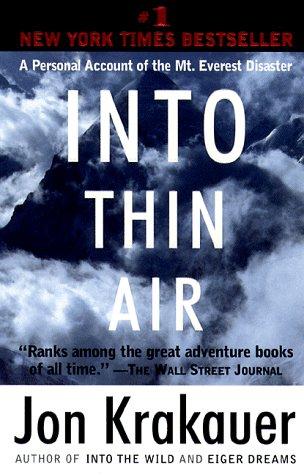
Into Thin Air
1996
- history
- adventure consultants. guided expedition (1996 : mount everest)
- adventure consultants guided expedition (1996 : mount everest)
- mountain madness (firm) everest expedition (1996)
- mountaineering expeditions
- nature
- mountaineering
- mountaineering accidents
- mountain madness (firm)
- nonfiction
The story
When Jon Krakauer reached the summit of Mt. Everest in the early afternoon of May 10,1996, he hadn't slept in fifty-seven hours and was reeling from the brain-altering effects of oxygen depletion. As he turned to begin the perilous descent from 29,028 feet (roughly the cruising altitude of an Airbus jetliner), twenty other climbers were still pushing doggedly to the top, unaware that the sky had begun to roil with clouds...Into Thin Air is the definitive account of the deadliest season in the history of Everest by the acclaimed Outside journalist and author of the bestselling Into the Wild. Taking the reader step by step from Katmandu to the mountain's deadly pinnacle, Krakauer has his readers shaking on the edge of their seat. Beyond the terrors of this account, however, he also peers deeply into the myth of the world's tallest mountain. What is is about Everest that has compelled so many poeple--including himself--to throw caution to the wind, ignore the concerns of loved ones, and willingly subject themselves to such risk, hardship, and expense? Written with emotional clarity and supported by his unimpeachable reporting, Krakauer's eyewitness account of what happened on the roof of the world is a singular achievement.From the Paperback edition.
What it’s like
Cold, bare and vertical: the book's atmosphere is built from thin air, white glare on snow, and the grey-blue hush of camps pinned to ice at altitude. Krakauer writes in a plain, reportorial voice that turns clinical when he explains oxygen deprivation and sharpens into something raw when he describes waking in a tent to a storm that has already claimed people he knows. The sensory world is extreme but precise: frostbitten fingers, the rasp of regulators, the hiss of tanks, wind that never quite stops. Its vibe is bleak awe, a cold, tense, sober unease that builds steadily rather than arriving in set pieces, and the pacing is relentless, a slow climb of mounting dread broken by long reflective passages on the commercial business of guiding strangers up the world's highest peak. The emotional register is grief, guilt and self-questioning, and its central figure is a reluctant witness slowly confronting his own role in what went wrong. Intensity is high: deaths are described in unflinching detail, with frostbite, exposure and a fall, but there is no gore for its own sake and no sexual content. It suits a long, quiet night with the lights low, or a reader who wants real stakes and a close look at human fallibility, rather than anyone seeking something gentle or comforting.
More books like Into Thin Air
Closest in mood, pacing and theme. Tell us why you loved Into Thin Airand we’ll explain which ones fit you.