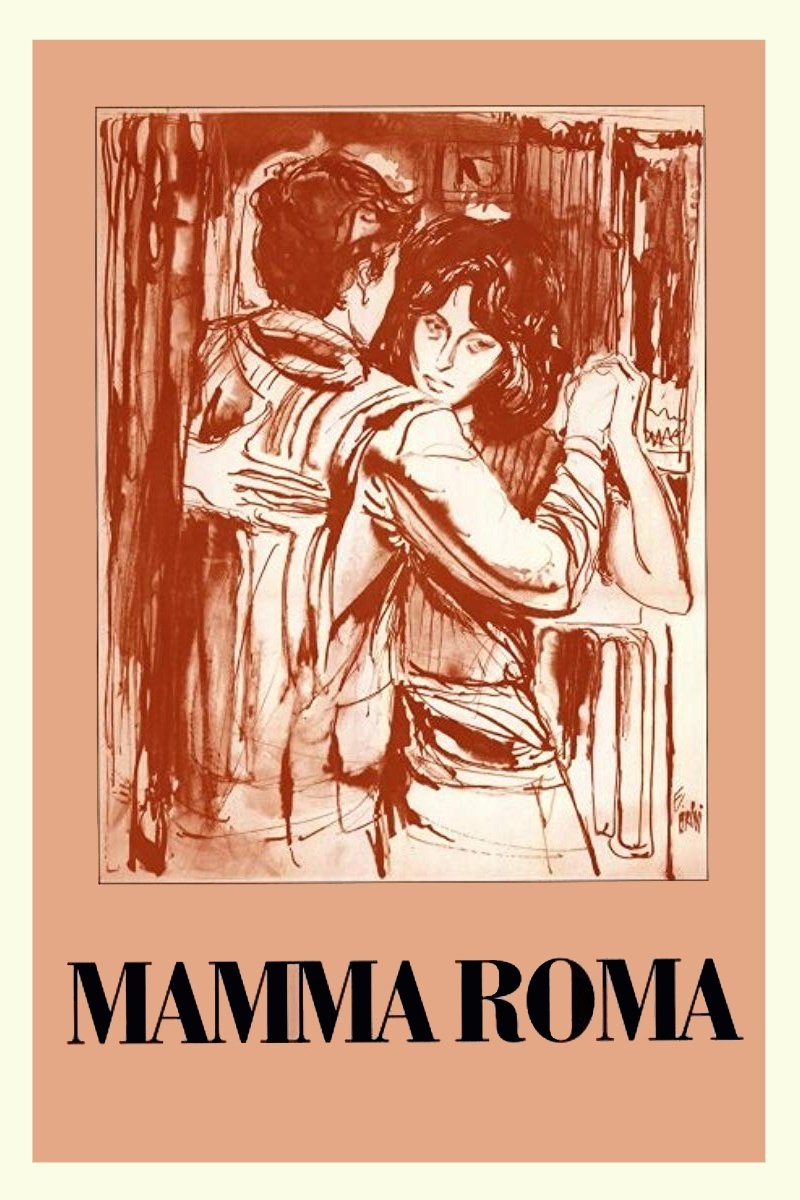
Mamma Roma
1962 · Directed by Pier Paolo Pasolini
Original language: Italian
- drama
The story
After years spent working as a prostitute in her Italian village, middle-aged Mamma Roma has saved enough money to buy herself a fruit stand so that she can have a respectable middle-class life and reestablish contact with the 16-year-old son she abandoned when he was an infant. But her former pimp threatens to expose her sordid past, and her troubled son seems destined to fall into a life of crime and violence.
What it’s like
Hard noon light bleaches the dusty outskirts of Rome, and the camera holds on faces and crumbling walls in frontal, deliberate compositions. Anna Magnani's expressive, weathered close-ups carry much of the film, while Pasolini's non-professional cast gives the streets an unpolished, lived-in texture. Church music and folk melodies drift through the soundtrack, sitting against stretches of raw street noise and silence. The mood is bruised and tender, a mix of melancholy, grit and stubborn hope, best suited to a quiet afternoon or a late evening when you can give it full attention. The pacing is patient, with long scenes of everyday exchange that build toward a harrowing final stretch of police brutality, rendered with unflinching dread more than gore. Prostitution and sexual content appear in implied and brief forms, and a pimp's threats add tension, but it is not explicit. The emotional register is elegiac and sorrowful, following a hardened mother's painful attempt to reconnect with her son. It suits viewers drawn to Italian neorealism and to Pasolini's austere, poetic approach to working-class lives.
More films like Mamma Roma
Closest in mood, pacing and theme. Tell us why you loved Mamma Romaand we’ll explain which ones fit you.