Multi-Users in Middle-earth
1992
- role-playing (rpg)
- hack and slash/beat 'em up
- open world
- massively multiplayer online (mmo)
The story
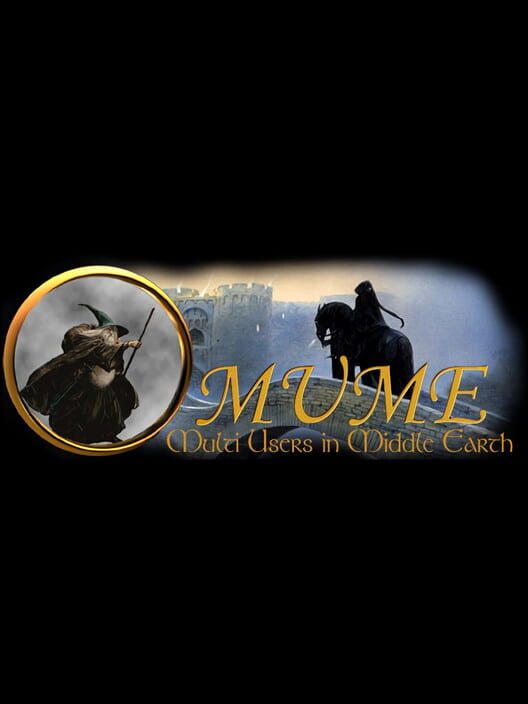
MUME, Multi-Users in Middle-earth, is a DikuMUD based upon J.R.R. Tolkien’s Middle-earth that has been continuously running, enhanced, and remastered since fall of 1991. In MUME, players are encouraged to role-play as they live in this meticulously crafted world exploring the conflict leading into the War of the Ring during the late Third Age. The action takes place nearly 100 years prior to The Hobbit but long after the loss of the One Ring by Sauron. The key to Erebor has just been found by Gandalf in Dol Guldur and all the epic tales narrated in The Lord of the Rings may take place. MUME covers 28,000+ original rooms from the mighty Dwarven Halls beyond the Gulf of the Lhûn in the West to the Mountains of Mirkwood in the East, and from the ruins of Fornost Erain in the North to the fortress of Isengard in the South. Players can choose among several different races, each with some unique characteristics. The races are separated into three striving factions. Dwarves, Elves, Half-Elves, Hobbits and Men — among them are the shapeshifting Beornings — are eternally at war with the Orcs, Trolls and Black Númenóreans. Moreover, the orkish tribe of the Zaugurz is trying to expand its territory at the expense of the Tarkhnarb Orcs of Goblin Gate. Most of this conflict takes place to the east and south of the town of Bree, but rare raids or solitary agents of the Red Eye have made it to as far west as the Dwarven homes in the Blue Mountains.
What it’s like
Text scrolling down a black terminal, with room descriptions written as paragraphs of prose and a quiet hum of other players' comings and goings. The sensory world lives entirely in the imagination: rain on the Bree road, the cold of Dol Guldur, the hush of Mirkwood, each rendered in a few evocative lines of description. Its vibe is a patient, communal wilderness, half-lonely and half-lively, the feel of an old Tolkien map pinned to a lamp-lit desk. Sessions suit a long quiet evening, a late-night wander alone, or a stretch of slow exploration with a few friends chatting in the background. The pace is set by the player: travel is slow, conversations unfold in real time, and fights break out in bursts of rapid command-line strikes, then settle back into calm. Violence is frequent but abstract, a matter of hit points and typed attacks in a long war between factions, with fear and cruelty described in words rather than shown. Nothing here is gory in a visual sense, though orcish raids and fallen foes make the war feel real. It is for people who want a living, roleplay-driven Middle-earth where the story is made in company, who enjoy text, lore, and the slow satisfaction of learning a place room by room.
More games like Multi-Users in Middle-earth
Closest in mood, pacing and theme. Tell us why you loved Multi-Users in Middle-earthand we’ll explain which ones fit you.