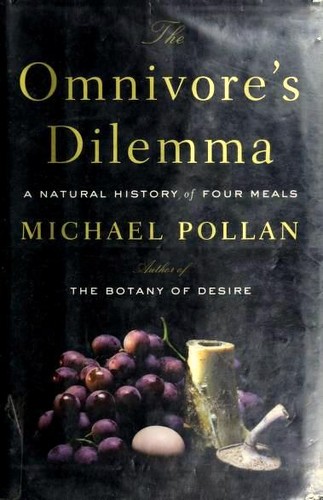
Omnivore's Dilemma. A Natural History of Four Meals
2006
- hunting
- foodies
- feral pigs
- wild mushrooms
- abalone
- salads
- leaf vegetables
- sourdough
- wild yeast
- cherries
The story
What should we have for dinner? The question has confronted us since man discovered fire, but according to Michael Pollan, the bestselling author of The Botany of Desire, how we answer it today, at the dawn of the twenty-first century, may well determine our very survival as a species. Should we eat a fast-food hamburger? Something organic? Or perhaps something we hunt, gather, or grow ourselves? The omnivore’s dilemma has returned with a vengeance, as the cornucopia of the modern American supermarket and fast-food outlet confronts us with a bewildering and treacherous food landscape. What’s at stake in our eating choices is not only our own and our children’s health, but the health of the environment that sustains life on earth. In this groundbreaking book, one of America’s most fascinating, original, and elegant writers turns his own omnivorous mind to the seemingly straightforward question of what we should have for dinner. To find out, Pollan follows each of the food chains that sustain us—industrial food, organic or alternative food, and food we forage ourselves—from the source to a final meal, and in the process develops a definitive account of the American way of eating. His absorbing narrative takes us from Iowa cornfields to food-science laboratories, from feedlots and fast-food restaurants to organic farms and hunting grounds, always emphasizing our dynamic coevolutionary relationship with the handful of plant and animal species we depend on. Each time Pollan sits down to a meal, he deploys his unique blend of personal and investigative journalism to trace the origins of everything consumed, revealing what we unwittingly ingest and explaining how our taste for particular foods and flavors reflects our evolutionary inheritance. The surprising answers Pollan offers to the simple question posed by this book have profound political, economic, psychological, and even moral implications for all of us. Beautifully written and thrillingly argued, The Omnivor
What it’s like
Clear, reflective nonfiction prose with a journalist's curiosity and a conversational, often wry voice that moves easily between farm fields, feedlots, forests and kitchens. The sensory world on the page is earthy and specific: the smell of a corn-fed steer pen, the damp of a mushroom hunt under oak, the tang of wild-yeast bread cooling on a counter, the heat of a pig being butchered over a fire. It reads as warm but unsentimental, a long conversation over a table rather than a lecture. Its vibe is curious, grounded and quietly unsettling, the kind of book that suits a rainy Sunday with a pot of soup on the stove, a long train ride, or an evening spent slowly reading a chapter at a time. The pacing is unhurried, with each section built around one meal and its origins, so the reader moves from industrial corn to organic farms to foraged and hunted food with a steady, reflective rhythm. Its emotional register is thoughtful and wry, more bemused than alarmed, and its arc is that of a writer slowly reconsidering his own appetites. Intensity is moderate: there are frank descriptions of slaughter, animal suffering in feedlots and a wild boar killing, rendered matter-of-factly rather than graphically, with no sexual content and little fear. It suits readers who enjoy food writing, environmental curiosity and thoughtful, first-person investigation.
More books like Omnivore's Dilemma. A Natural History of Four Meals
Closest in mood, pacing and theme. Tell us why you loved Omnivore's Dilemma. A Natural History of Four Mealsand we’ll explain which ones fit you.