Ordet
1955 · Directed by Carl Theodor Dreyer
Original language: Danish
- drama
The story
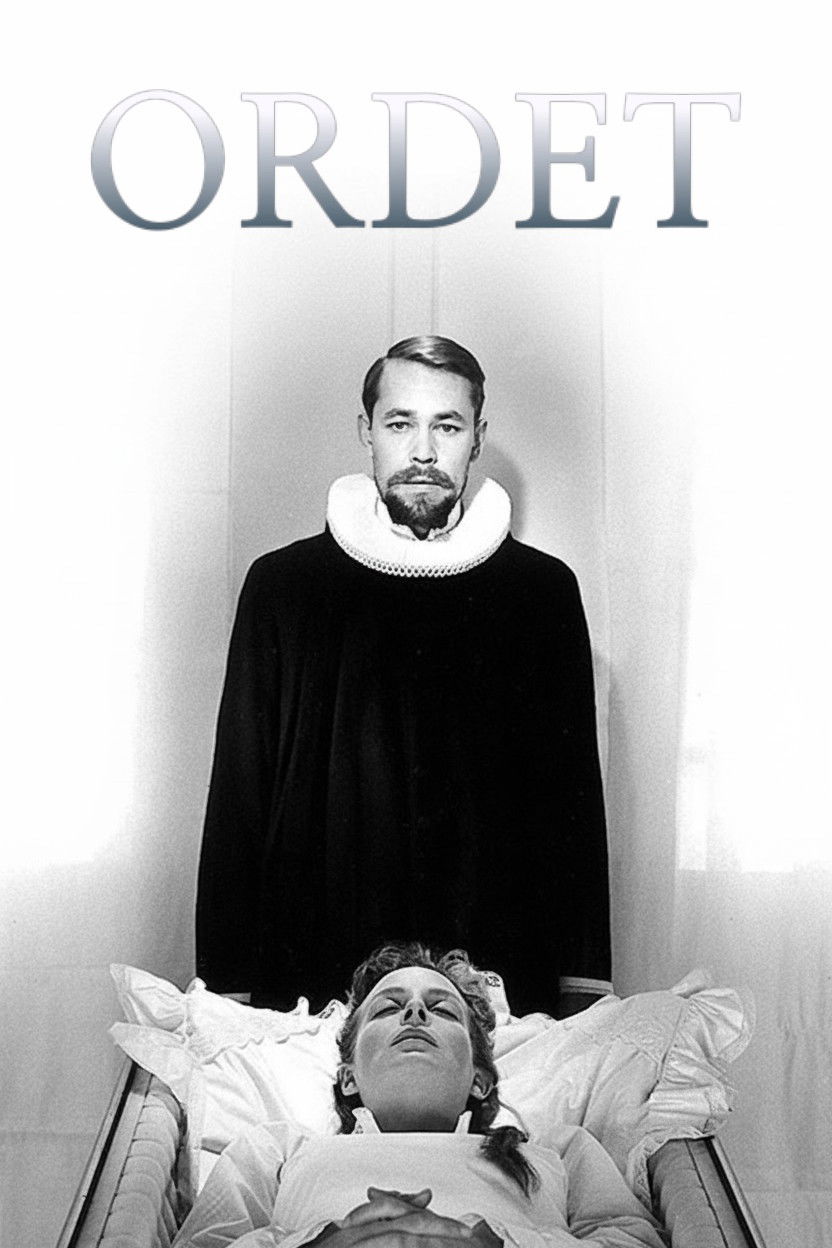
The three sons of devout Danish farmer Morten have widely disparate religious beliefs. Youngest son Anders shares his father's religion, but eldest son Mikkel has lost his faith, while middle child Johannes has become delusional and proclaims that he is Jesus Christ himself. When Mikkel's wife, Inger goes into a difficult childbirth, everyone's beliefs are put to the test.
What it’s like
Ordet is a black-and-white Danish film of long, static, carefully composed shots: rooms of whitewashed walls and plain wooden furniture, doorways framed like altarpieces, and a stillness so patient that a single gesture or a change in daylight through a window carries real weight. The light is natural and northern, grey and diffuse for much of the runtime, with the interiors lit from windows and lamps so the faces seem to hold their own glow. The sound is sparse, dominated by clocks, wind, footsteps on bare floors and long silences between spoken lines, with almost no score to tell you what to feel. The pace is slow and deliberate, and the tone is solemn, austere and quietly uncanny, the emotional register rising gradually toward a climax that feels earned rather than manipulated. Its people are a family in a remote farmhouse, and the arcs are about doubt and conviction slowly reshaping how they love one another. The film contains no gore or graphic violence; its intensity is spiritual and emotional, with grief and a tense death-bed sequence handled with restraint. It suits a quiet, attentive evening alone or with a patient partner, and is for viewers who want contemplative, dialogue-driven cinema about faith and grace rather than spectacle.
More films like Ordet
Closest in mood, pacing and theme. Tell us why you loved Ordetand we’ll explain which ones fit you.