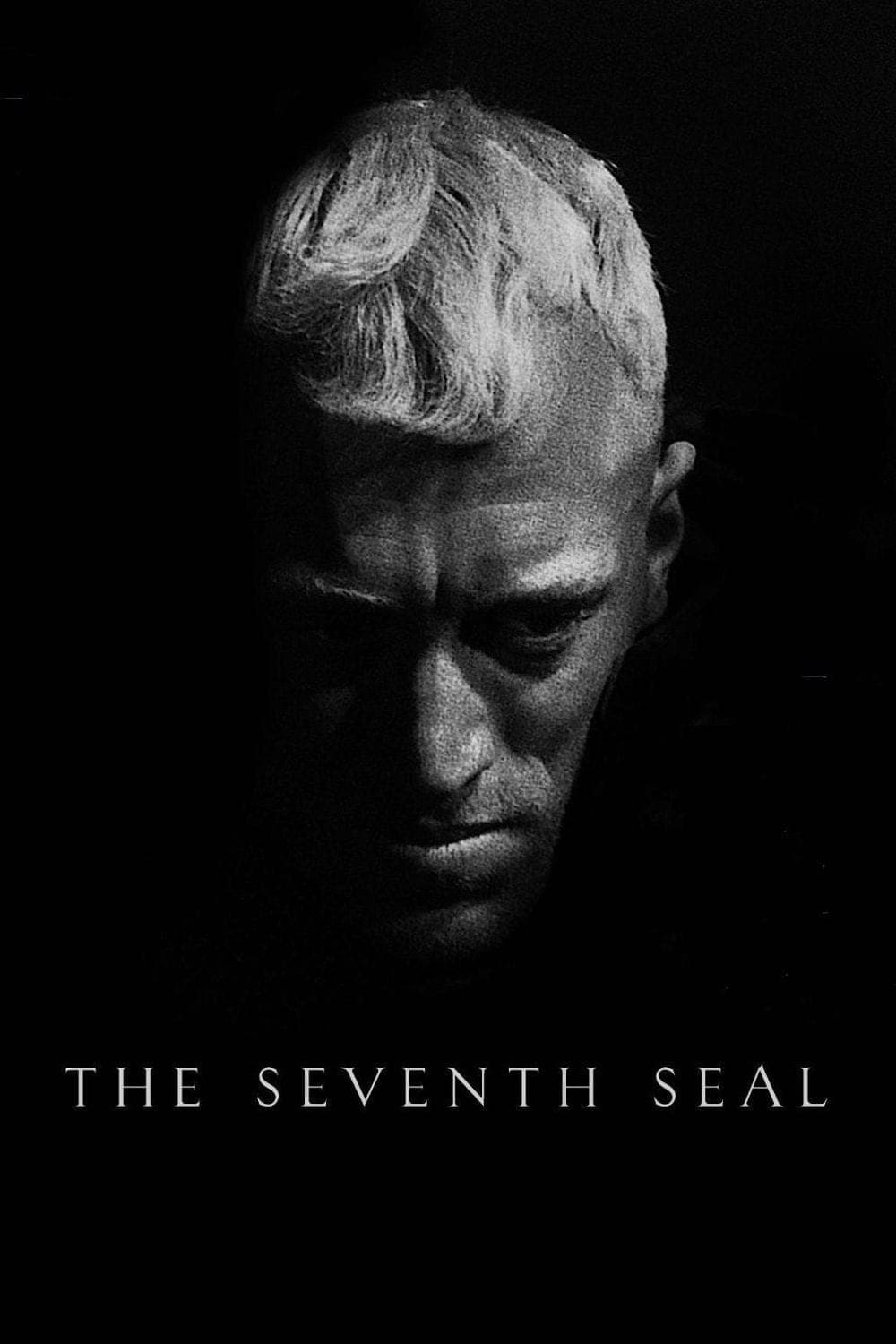
The Seventh Seal
1957 · Directed by Ingmar Bergman
Original language: Swedish
- fantasy
- drama
The story
When disillusioned Swedish knight Antonius Block returns home from the Crusades to find his country in the grips of the Black Death, he challenges Death to a chess match for his life. Tormented by the belief that God does not exist, Block sets off on a journey, meeting up with traveling players Jof and his wife, Mia, and becoming determined to evade Death long enough to commit one redemptive act while he still lives.
What it’s like
Stark black-and-white cinematography by Gunnar Fischer, with high-contrast chiaroscuro, bleached skies over bare Swedish heaths, and dark, sooty interiors lit by a single candle or the cold glare of a window. Compositions are often frontal and still, with long held shots that let faces, clouds and rolling mist do the work, and the camera drifts slowly enough that you notice the wind moving grass or a tree's shadow crawling across a wall. Sound is sparse: wooden cart wheels, church bells, the scrape of a blade on a whetstone, and a plain, mournful score that leaves wide stretches of quiet. The mood is austere, philosophical and melancholy, shot through with flashes of grim folk humour and rustic warmth from the traveling players. Pacing is deliberate, with long conversations and silences, and the emotional arc follows a weary knight moving from despair toward a fragile, hard-won tenderness. Intensity is moderate: a witch burning and plague corpses are shown, and there is some brief, sharp violence and a scene of flagellants, but no gore, and the dread lands through atmosphere more than shock. Made for viewers who want a slow, serious, visually striking meditation on faith, mortality and small human kindness.
More films like The Seventh Seal
Closest in mood, pacing and theme. Tell us why you loved The Seventh Sealand we’ll explain which ones fit you.