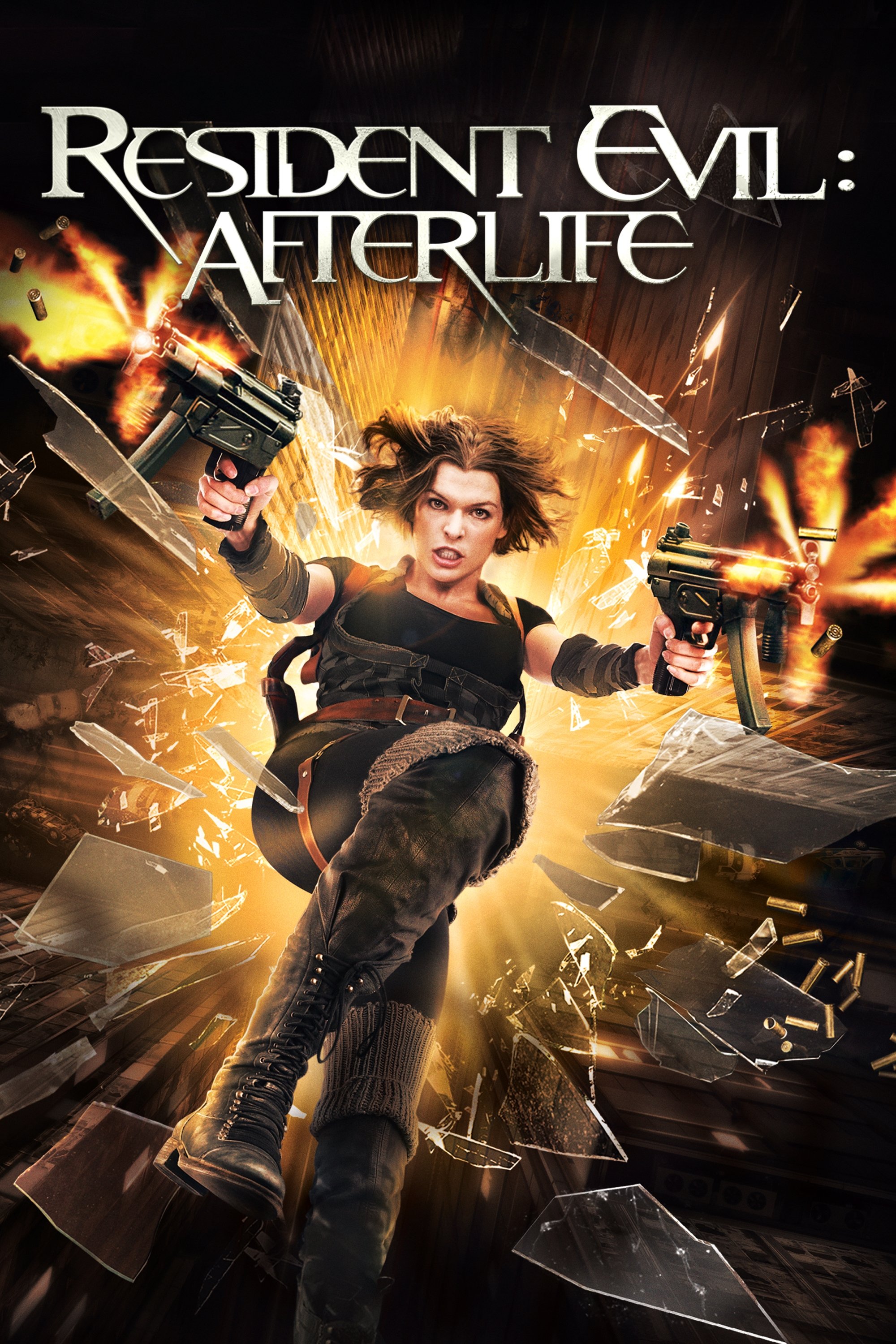
Resident Evil: Afterlife
2010 · Directed by Paul W. S. Anderson
Original language: English
- action
- adventure
- horror
- science fiction
The story
In a world ravaged by a virus infection, turning its victims into the Undead, Alice continues on her journey to find survivors and lead them to safety. Her deadly battle with the Umbrella Corporation reaches new heights, but Alice gets some unexpected help from an old friend. A new lead that promises a safe haven from the Undead takes them to Los Angeles, but when they arrive the city is overrun by thousands of Undead - and Alice and her comrades are about to step into a deadly trap.
What it’s like
Cold, saturated digital imagery dominates here: bleached white corridors and sterile laboratory light give way to dusky, ash-grey desert and the sickly green-tinged glow of emergency lamps, with a glossy, hard-edged sheen that never softens into warmth. Camera moves are kinetic, with slow-motion slashes, whip pans and sudden stillness before a burst of gunfire, and the action staging is clean and choreographed rather than messy. The soundtrack is driven by pounding electronic percussion and bass pulses, punctuated by shrieks and the crack of automatic fire. Vibe: slick, apocalyptic adrenaline with a sense of mounting dread. Violence is frequent and stylised, with plenty of gunfire, zombie bloodshed and gore, a few brutal kills, and occasional peril that lands harder than the spectacle, though it is never lingering or intimate. Pacing is relentless, with few quiet breaks, and the emotional arc follows a steely, solitary heroine who slowly reconnects with her allies as they face overwhelming odds. Made for people who want high-octane sci-fi horror, fast cuts and an unapologetically pumped-up action ride, not gentleness.
More films like Resident Evil: Afterlife
Closest in mood, pacing and theme. Tell us why you loved Resident Evil: Afterlifeand we’ll explain which ones fit you.