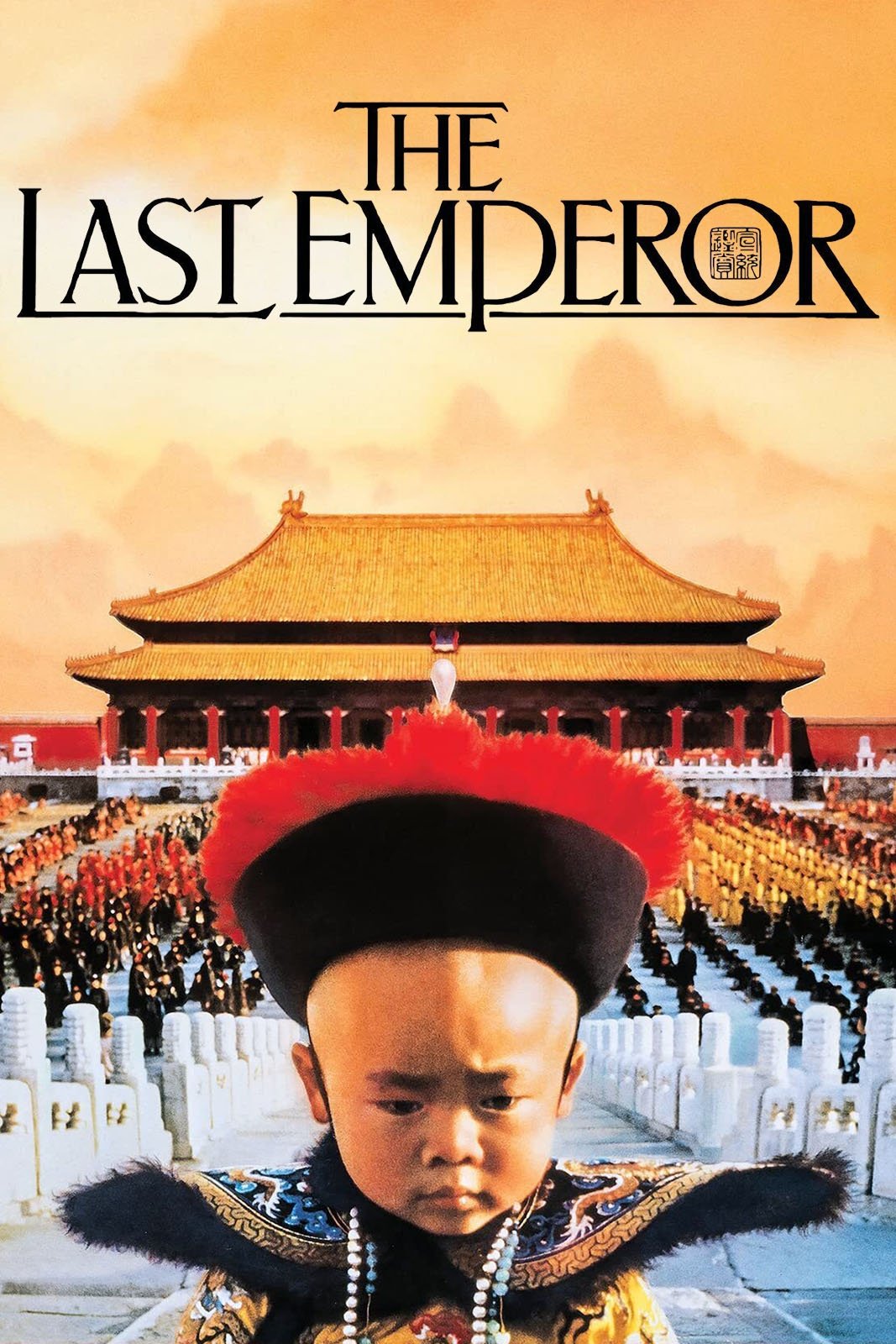
The Last Emperor
1987 · Directed by Bernardo Bertolucci
Original language: English
- drama
- history
The story
A dramatic history of Pu Yi, the last of the Emperors of China, from his lofty birth and brief reign in the Forbidden City, the object of worship by half a billion people; through his abdication, his decline and dissolute lifestyle; his exploitation by the invading Japanese, and finally to his obscure existence as just another peasant worker in the People's Republic.
What it’s like
Warm amber and gold light fills the Forbidden City's vast, symmetrical courtyards, then drains gradually into grey Maoist-era concrete and muted uniform tones as the film moves forward. Sweeping, unhurried camera moves glide through palace halls and across crowded ceremonies, while close interiors of cramped rooms and dim opium dens feel hushed and heavy. Ryuichi Sakamoto's score, with its delicate piano and swelling strings, surfaces in quiet, melancholy passages and mostly gives way to ambient palace silence. The mood is stately, elegiac and lonely, a slow sit with a boy raised in ritual isolation who grows into an adult caught between others' ambitions. Pacing is deliberate and spans nearly three hours, with long takes that let the spaces breathe. Violence is limited but real: a suicide attempt, scattered wartime and political brutality, and a harsh re-education sequence, delivered without gore. There is some sexual content and opium use. It suits a slow, contemplative evening, and it is for viewers who enjoy grand historical canvases, measured cinematography and reflective character studies.
More films like The Last Emperor
Closest in mood, pacing and theme. Tell us why you loved The Last Emperorand we’ll explain which ones fit you.