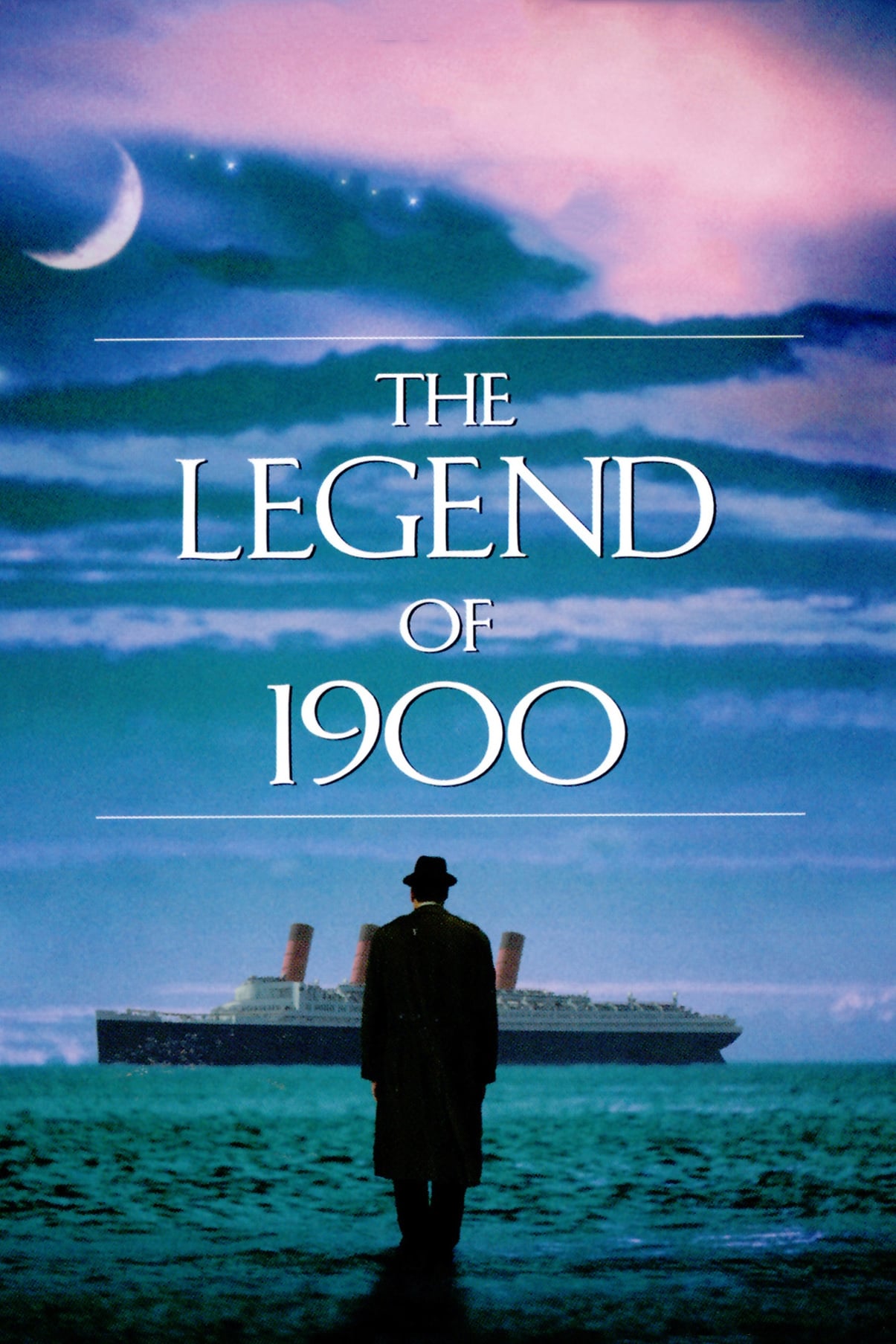
The Legend of 1900
1998 · Directed by Giuseppe Tornatore
Original language: Italian
- drama
- music
The story
Musician Max Tooney goes to sell his prized Conn trumpet to a music shop, where he plays the instrument one last time. The shopkeeper recognises the song as one on a record matrix he found and asks who the piece is by. Tooney tells the story of an infant found abandoned in the first class dining room of the four-stacker ocean-liner SS Virginian on 1 January 1900. Danny Boodman, a coal-man from the boiler room, names the boy Danny Boodman T. D. Lemon 1900, after himself, the fruit crate the boy was found in, and the year, and raises him as his own.
What it’s like
Warm, golden-brown interiors and a shipboard world of brass, polished wood and cramped boiler-room soot, shot with a sweeping, fluid camera that glides through ballrooms and corridors like memory itself. Tornatore's images run lush and romantic: sea haze and fog over an endless ocean, candlelit parlours, the glow of stage lamps against dark water, all softened by a nostalgic gleam. Ennio Morricone's score is the heartbeat, lush and melodic, with piano and jazz-tinged themes that swell during the pianist's dazzling performances and fall to near silence in the quiet spaces between notes. The vibe is bittersweet wonder, a tender melancholy that feels like a long exhale, with a pace that lingers on small moments of connection and music. The emotional arc follows a gentle, lifelong bond between a man and the foundling he raises at sea, moving from wonder toward a quietly devastating goodbye. Intensity is low: some tense scenes and a few brief moments of peril, with no gore and little violence, though the ending is sorrowful and will sting. Best for people who want a romantic, music-soaked story to sink into on a rainy evening, and for those who love the ache of a beautiful, unhurried film.
More films like The Legend of 1900
Closest in mood, pacing and theme. Tell us why you loved The Legend of 1900and we’ll explain which ones fit you.