The Phantom Tollbooth
1961
- letters
- numbers
- orchestras
- children's literature
- adventure
- creativity and imagination
- boredom
- magic and supernatural
- discovery and learning
- american fantasy fiction
The story
The Phantom Tollbooth is a children's fantasy adventure novel written by Norton Juster with illustrations by Jules Feiffer. It was published in 1961 by Random House (USA). It tells the story of a bored young boy named Milo who unexpectedly receives a magic tollbooth one afternoon and, having nothing better to do, drives through it in his toy car, transporting him to the Kingdom of Wisdom, once prosperous but now troubled. There, he acquires two faithful companions, a dog named Tock and the Humbug, and goes on a quest to restore to the kingdom its exiled princesses—named Rhyme and Reason—from the Castle in the Air. In the process, he learns valuable lessons, finding a love of learning. The text is full of puns and wordplay, such as when Milo unintentionally jumps to Conclusions, an island in Wisdom, thus exploring the literal meanings of idioms.
What it’s like
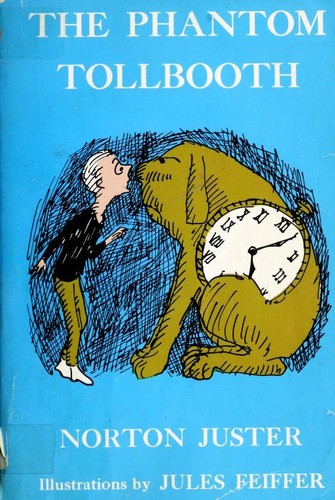
Bright, playful wordplay on every page, with Jules Feiffer's loose pen-and-ink drawings (spare line work, cross-hatched shadows, a lot of white space) giving the whole book a sketchy, hand-made feel. The Kingdom of Wisdom is a mix of picture-book whimsy and dry wit: a rain-soaked Dictionopolis of market stalls, a shining Digitopolis of numbers, and a grey, sun-dimmed sky that brightens as the story goes. The voice is quick, sly and conversational, with rhythms that love a good pun or a sudden absurd detour, and it reads aloud beautifully. Pacing is brisk and episodic, each chapter a new encounter or small mishap rather than a slow build. The emotional register is warm and buoyant, with a gentle undercurrent of boredom turning into curiosity, and Milo's arc moves from listless sulking to eager engagement with the world. Nothing here is frightening: the peril is silly rather than menacing, with no violence, gore or sexual content, and the only real tension is a bit of comic dread. It suits a rainy afternoon, a comfort reread, or reading aloud to a child, and it is for readers who love clever language, playful invention and stories that treat curiosity as a kind of magic.
More books like The Phantom Tollbooth
Closest in mood, pacing and theme. Tell us why you loved The Phantom Tollboothand we’ll explain which ones fit you.