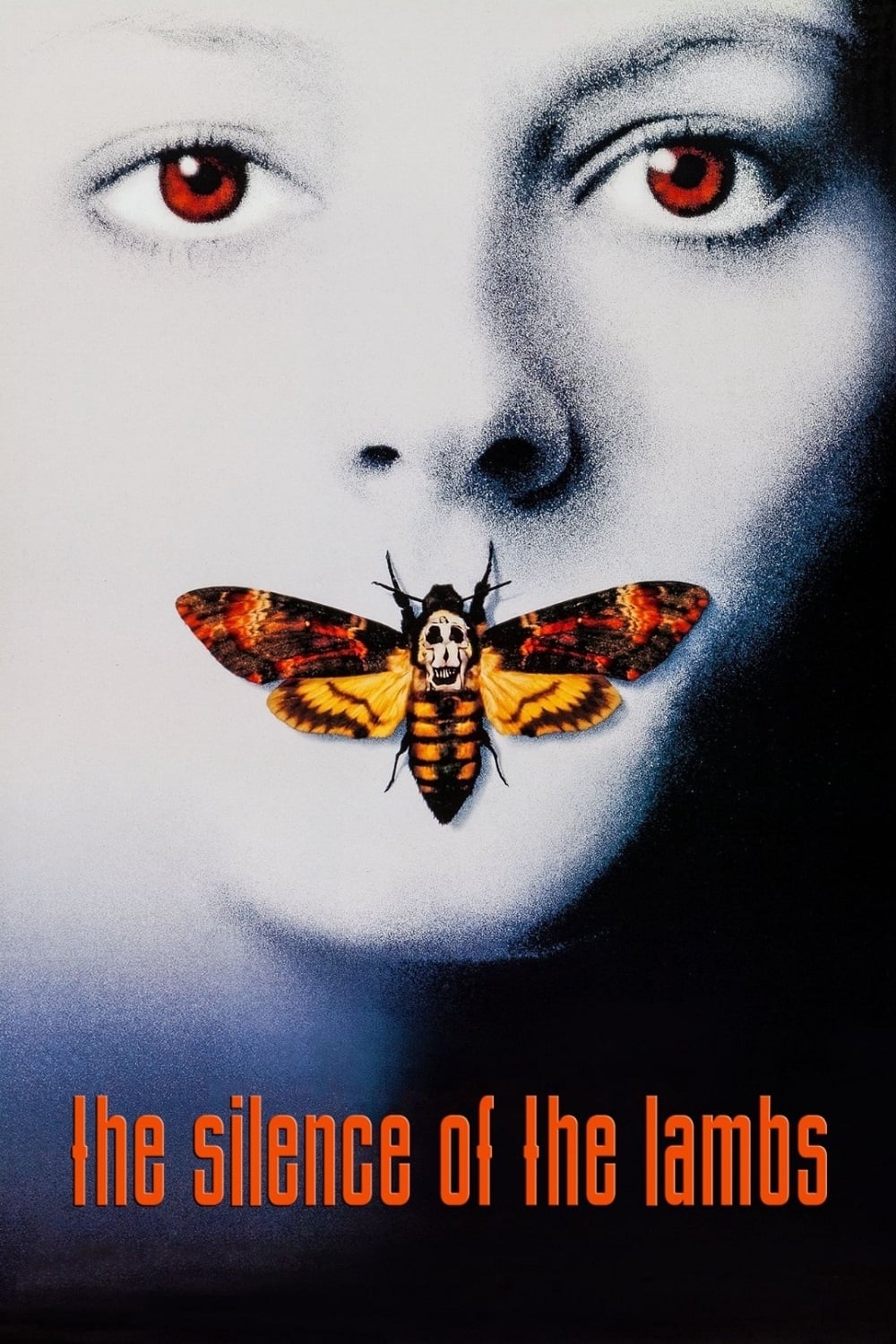
The Silence of the Lambs
1991 · Directed by Jonathan Demme
Original language: English
- crime
- thriller
- drama
The story
Clarice Starling is a top student at the FBI's training academy. Jack Crawford wants Clarice to interview Dr. Hannibal Lecter, a brilliant psychiatrist who is also a violent psychopath, serving life behind bars for various acts of murder and cannibalism. Crawford believes that Lecter may have insight into a case and that Starling, as an attractive young woman, may be just the bait to draw him out.
What it’s like
Cold, clinical fluorescents and drab institutional greens dominate much of the film, with the prison corridors and Lecter's cell rendered in sterile, washed-out tones that feel airless. Demme's camera stays close and restless, often handheld over Clarice's shoulder, so the tension lives in faces and in the spaces between them: a long static stare through glass, a sudden cut to a dark basement or a dim, moth-strewn house at night. The score is sparse and throbbing, built on low strings and synth pulses that rise without warning, and the quiet stretches are often more unnerving than the noise. Its vibe is taut, clammy unease, the kind of tension you feel in your shoulders. It suits a late-night watch alone with the lights off, though it is far from comfort viewing. The pacing is deliberate, building through interrogation scenes and procedural detail toward sharp bursts of violence that land hard and are brief, with some gore and frightening, sustained menace, and a murder plot involving captivity and cruelty. Clarice's arc is a determined young woman pushing through fear and men's condescension to find her footing, while the relationship with Lecter is a chilling, intimate duel of minds. It is for people who want a sharply made psychological thriller and can handle dread and brutality.
More films like The Silence of the Lambs
Closest in mood, pacing and theme. Tell us why you loved The Silence of the Lambsand we’ll explain which ones fit you.