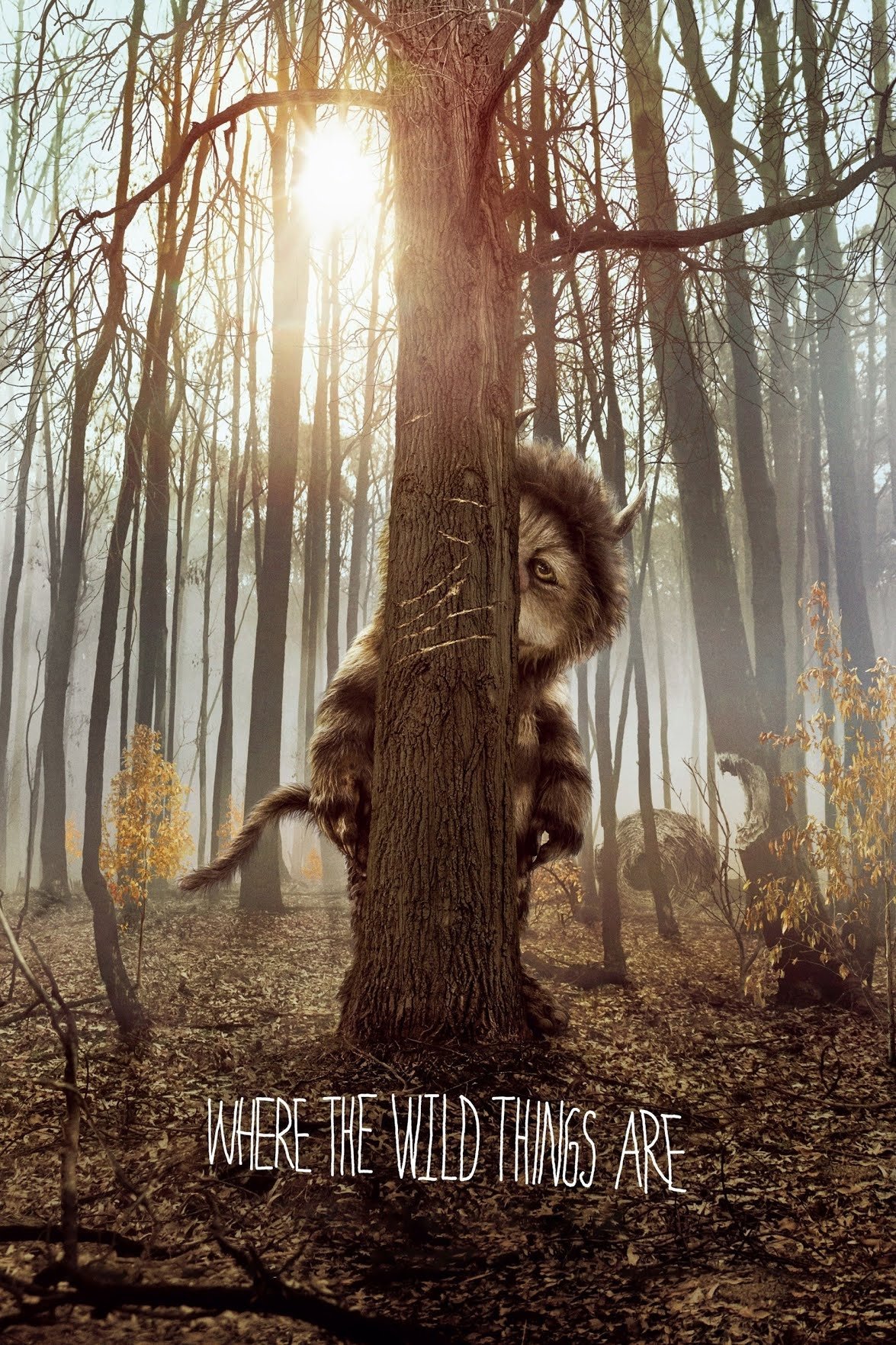
Where the Wild Things Are
2009 · Directed by Spike Jonze
Original language: English
- adventure
- drama
- family
- fantasy
The story
Max imagines running away from his mom and sailing to a far-off land where large talking beasts—Ira, Carol, Douglas, the Bull, Judith and Alexander—crown him as their king, play rumpus, build forts and discover secret hideaways.
What it’s like
Handheld, close-in camera that stays at a child's eye level, with the world around it looking warm and slightly unsteady: soft natural daylight through bedroom windows, a suburban house gone grey and wintry, then a wild island of sun-bleached grass, dusty dunes and mossy hollows lit in low golden hour. Costumes and creature faces are built from real fur and hand-stitched textures rather than glossy digital skin, so the monsters feel physically present, lumbering and clumsy in the frame. The score is sparse and wistful, with plucked strings and long quiet stretches where only wind, breath and rustling leaves fill the room. The vibe is tender, restless and bittersweet, with a melancholy undertow that surfaces in moments of hurt and disappointment. It suits a grey afternoon, a reflective evening alone, or a thoughtful rewatch with someone who remembers being a child. Pacing is loose and meandering, shaped around play, quarrels and sudden silences, and the emotional arc follows a lonely, impulsive boy learning to read his own anger and loneliness in the people who love him. Intensity is mild: some shouting, tantrums, sadness and a few rough tumbles, with no gore and no sexual content. For people who want something gentle, imaginative and emotionally honest, with the feel of a childhood afternoon stretched into a whole film.
More films like Where the Wild Things Are
Closest in mood, pacing and theme. Tell us why you loved Where the Wild Things Areand we’ll explain which ones fit you.