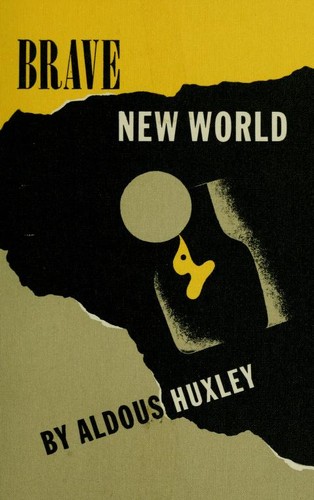
Brave New World and Brave New World Revisited
1942
- fiction
- science fiction
- family
- freedom
- collectivism
- genetic engineering
- totalitarianism
- brainwashing
- culture
- dystopias
The story
In *Brave New World*, Aldous Huxley prophesied a capitalist civilization, which had been reconstituted through scientific and psychological engineering, a world in which people are genetically designed to be passive and useful to the ruling class. Huxley opens the book by allowing the reader to eavesdrop on the tour of the fertilizing Room of the Central London Hatchery and Conditioning center, where the high tech reproduction takes place. One of the characters, Bernard Marx, seems alone, harboring an ill-defined longing to break free. Satirical and disturbing, *Brave New World* is set some 600 years into the future. Reproduction is controlled through genetic engineering, and people are bred into a rigid class system. As they mature, they are conditioned to be happy with the roles that society has created for them.
What it’s like
Cool, clinical prose that reads like a tour script: sterile white corridors, bottled-light efficiency, and a voice that is detached, witty and quietly appalled, as if an anthropologist were narrating from inside the machine. The mood is ironic unease, the kind of chill that comes from pleasant surfaces hiding something rotten. Chapters move briskly, with long dialogue exchanges between characters who speak in slogans and borrowed phrases, interrupted by sharp digressions and occasional passages of rhapsodic, almost hymn-like language. The emotional register stays cool for most of the book, warming only around one man who feels out of step and slowly, painfully, begins to want something he cannot name. The intensity is moderate: sexual content is frank and casual, with drug use (soma) and a few harrowing scenes of conditioning and cruelty, but violence is rare and mostly offstage, and the dread is intellectual rather than gory. It suits a rainy weekend with a strong pot of tea, a long-haul flight, or a reader who likes ideas to sit with. It is for people who enjoy satire, moral unease and social argument, and who are not looking for something gentle.
More books like Brave New World and Brave New World Revisited
Closest in mood, pacing and theme. Tell us why you loved Brave New World and Brave New World Revisitedand we’ll explain which ones fit you.