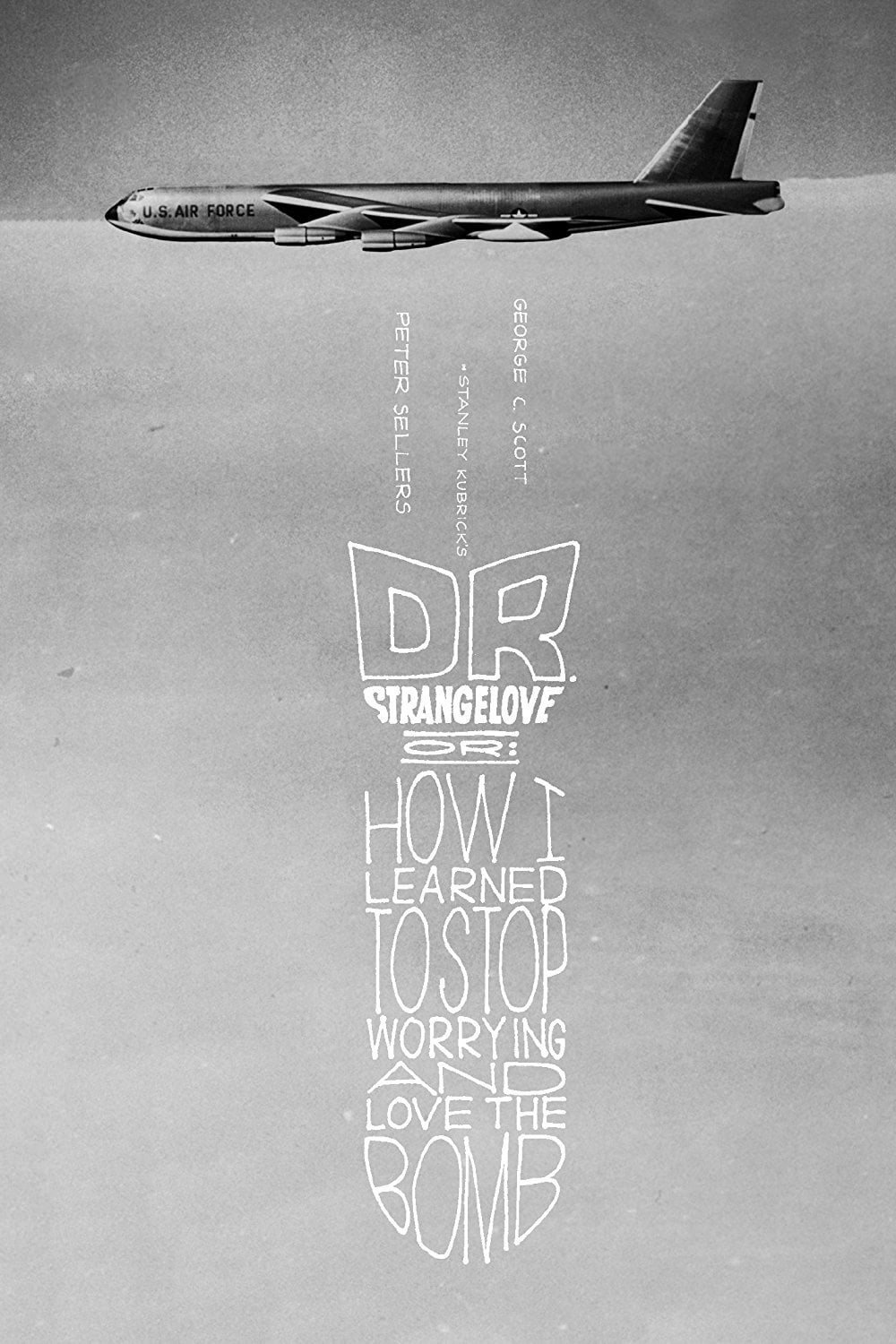
Dr. Strangelove or: How I Learned to Stop Worrying and Love the Bomb
1964 · Directed by Stanley Kubrick
Original language: English
- comedy
- war
The story
After the insane General Jack D. Ripper initiates a nuclear strike on the Soviet Union, a war room full of politicians, generals and a Russian diplomat all frantically try to stop it.
What it’s like
Crisp black-and-white widescreen with a precise, almost architectural eye: the war room is a vast, cold set of glowing consoles and a long oval table, shot in deep staging where characters sit at opposite ends of the frame and the camera barely moves. Bomber interiors are cramped and grimy, lit by harsh overhead fluorescents and the flat glare of instrument panels, while the Texas airbase and a Coca-Cola-bright officer's office offer a sun-bleached counterpoint. The score is a jaunty, anachronistic medley of period tunes and ominous airy tones that undercuts every catastrophe. Vibe: deadpan, clinical, cynical and giddy at once, a cold-war nightmare played as sharp satire. Pacing is brisk and bickering, with dialogue doing most of the work and a frantic escalation toward absurd finality. Violence is absent on screen beyond the implied and the grim, mushroom-cloud ending, so it reads as dark comedy rather than horror, with no gore and no sexual content. It suits a late-night, watch-with-a-friend viewing for people who enjoy bleak political satire, cynical humour and precisely composed black-and-white images.
More films like Dr. Strangelove or: How I Learned to Stop Worrying and Love the Bomb
Closest in mood, pacing and theme. Tell us why you loved Dr. Strangelove or: How I Learned to Stop Worrying and Love the Bomband we’ll explain which ones fit you.