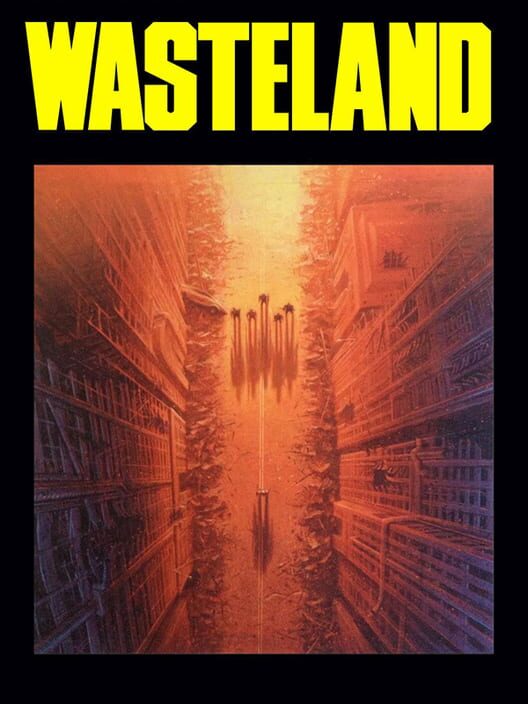
Wasteland
1988
Audio: English · Subtitles: English
- role-playing (rpg)
- turn-based strategy (tbs)
- adventure
- indie
- science fiction
- survival
- single player
The story
The game mechanics were based directly on those used in the tabletop role-playing games Tunnels and Trolls and Mercenaries, Spies and Private Eyes created by Wasteland developers Ken St. Andre and Michael Stackpole. Characters in Wasteland consequently have various statistics (strength, intelligence and luck among others) that allow them to use different skills and weapons. Experience is gained through battle and through use of skills. The game would generally let players advance with a variety of tactics: to get through a locked gate, a player could use his picklock skill, his climb skill, or his strength attribute; or he could force the gate with a crowbar - or a LAW rocket. The initial band of Desert Rangers encountered a number of NPCs as the game progressed who could be recruited into the party of up to seven. Unlike those of other computer RPGs of the time, these NPCs might temporarily refuse to give up an item or perform an action if ordered to do so. The game was also noted for its high and unforgiving difficulty level and for such combat prose as "reduced to a thin red paste" and "explodes like a blood sausage", which prompted an unofficial PG-13 sticker on the game packaging in the United States. Wasteland was one of the first games featuring a persistent world, where changes to the game world were stored and kept. Returning to areas later in the game, one would find them in the state one left them in, instead of being reset to their original state, as was common for games of the time. Since hard drives were still rare in home computers in 1988, this meant the original game disk had to be copied first, as the manual instructed one to do.
What it’s like
Harsh, bleached pixel art of a ruined American desert: sun-scorched sand, rusted wrecks, and hard-edged ruins rendered in a limited, dusty palette that the eye reads quickly and the imagination fills in. Its sound is sparse, with chiptune blips, clanking mechanical effects, and long stretches of near silence across the overworld. The feel is slow, deliberate exploration in turn-based combat, where every choice matters and mistakes come with a sudden, grisly cost. Gore is present in blunt, comic-macabre text: enemies are "reduced to a thin red paste," and violence lands as brief, cartoonish shock rather than lingering dread, with dark humor undercutting the grim tone. Drug use, gambling, and irradiated mutants color the world without explicit depiction. Its mood is grimy, sardonic, and austere, a cold-desert survival fantasy with a sly grin. It suits a long, stubborn evening of tinkering with a party, or a retro session for players who enjoy punishing difficulty, emergent problem-solving, and an old-school RPG that treats the player as a capable adult, not a hand-held tourist.
More games like Wasteland
Closest in mood, pacing and theme. Tell us why you loved Wastelandand we’ll explain which ones fit you.