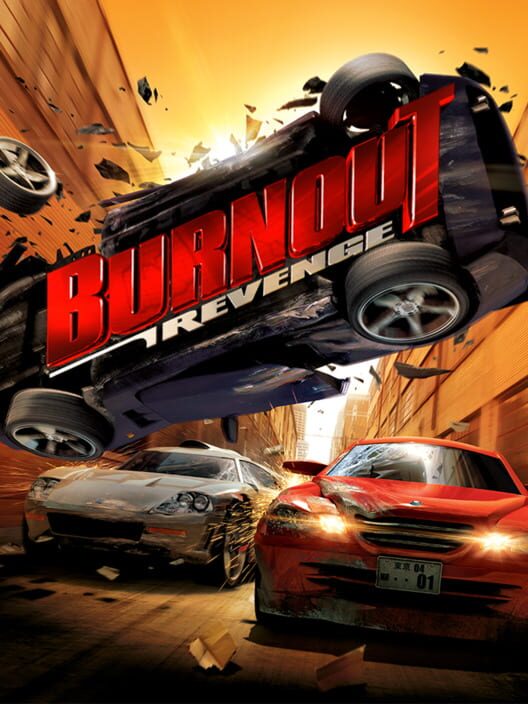
Burnout Revenge
2005
- racing
- action
- single player
- multiplayer
The story
In Burnout Revenge, players compete in a range of racing game types with different aims. These take place within rush-hour traffic, and include circuit racing, Road Rage (where players cause as many rivals to crash as possible within a time limit, or until the player's car is wrecked), Burning Lap (a single-lap, single-racer time attack mode), Eliminator (a circuit race where every thirty seconds, the last-placed racer's car is detonated; the race continues until only one racer is left), and Crash (where the player is placed at a junction with the aim of accumulating as many "Crash Dollars" as possible). A new gameplay feature in Burnout Revenge is the ability to ram same-way small to medium traffic, known as "traffic checking", propelling the rammed car forward; the event in which a "checked" car hits a rival is considered as a Traffic Takedown. Traffic checking is the focus of a new race type, Traffic Attack (whereby a player must earn a set amount of Crash Dollars through checking traffic), which can be used later on. During these events, players have access to a limited amount of boost which is acquired through various dangerous driving techniques, including but not limited to driving on the wrong side of the road, tailgating opponents and drifting. Unique to the series is the concept of battling other rivals; unlike other video games in the racing genre, players are encouraged, and sometimes even required, to ram rival cars and cause traffic to crash. Causing a rival to crash is referred to as a "Takedown", rewarding the player by extending the length of their boost gauge and completely refilling it. In designated events, boost can also be used to activate a "Crashbreaker" during a crash, detonating the car and causing other nearby cars to crash. When the rival car takes the player down, the player will have to take the ultimate REVENGE by taking down the revenge rivals (which the arrow at the top of the car turned red) is referred to as "Revenge Takedown". In
What it’s like
Saturated, high-speed daylight over a sprawling city, with blown-out sunlight glinting off chrome and glass as traffic blurs past at impossible velocity. The palette runs hot: sunset oranges, bright sky blues, and the red flash of a rival's marker, all rendered in clean, glossy digital polish that reads as arcade-bright rather than gritty. Camera work is kinetic, with chase-cam framing that swings tight behind the bumper and snaps into slow-motion replays of crumpling sheet metal whenever a takedown lands. The soundtrack is a loud, licensed rock and electronic playlist, with engine roar, crunching impacts, and crowd-like crowd noise filling every gap. Vibe: adrenaline-fuelled, brash, and giddy, a loud hit of chaos for a Saturday afternoon or a short burst of stress relief. The pacing is relentless, with rounds lasting only minutes and every mode pushing toward the next crash. Emotionally it is cheeky and competitive, a rivalry-driven grudge match that keeps escalating. Violence is constant but cartoonish: cars explode, flip, and wreck in bright spectacle, with no blood or gore and no human harm. It suits players who want high-energy competition, score-chasing, and a little petty revenge, not calm or gentle play.
More games like Burnout Revenge
Closest in mood, pacing and theme. Tell us why you loved Burnout Revengeand we’ll explain which ones fit you.